The Structure of Scientific Revolutions Book Summary
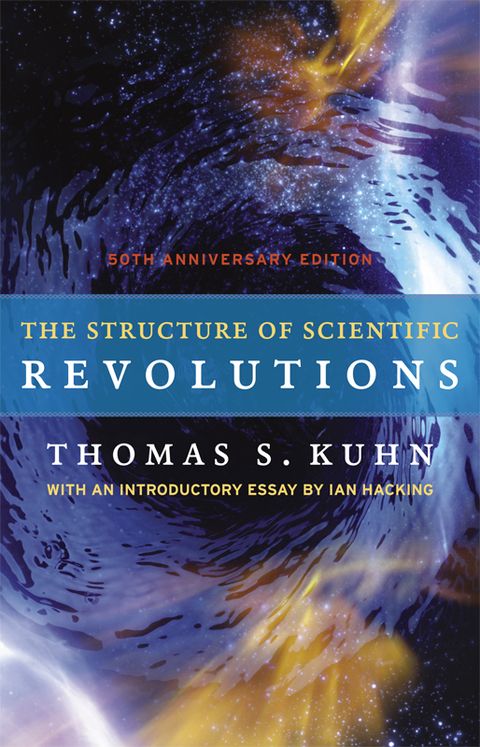
In "The Structure of Scientific Revolutions," Thomas S. Kuhn challenges the traditional view of scientific progress, arguing that it unfolds not through a linear accumulation of knowledge but via transformative paradigm shifts. He illustrates how revolutions in thought disrupt the established scientific order, forever altering the way we understand the world. Kuhn's compelling concept of "normal science" is juxtaposed with revolutionary breakthroughs that redefine entire fields. This thought-provoking exploration raises essential questions about the nature of truth and the progress of human knowledge. Discover how scientific advancements are less about discovery and more about evolution in thought, sparking curiosity about what radical shifts lie ahead.
By Thomas S. Kuhn
Published: 2012
"Scientific progress is not a gradual and cumulative process but rather a series of peaceful interludes punctuated by intellectually violent revolutions."

Start Listening to Book Summary
Book Review of The Structure of Scientific Revolutions
“One of the most influential books of the 20th century,” the landmark study in the history of science with a new introduction by philosopher Ian Hacking (Guardian, UK). First published in 1962, Thomas Kuhn’s The Structure of Scientific Revolutions ”reshaped our understanding of the scientific enterprise and human inquiry in general.” In it, he challenged long-standing assumptions about scientific progress, arguing that transformative ideas don’t arise from the gradual process of experimentation and data accumulation, but instead occur outside of “normal science.” Though Kuhn was writing when physics ruled the sciences, his ideas on how scientific revolutions bring order to the anomalies that amass over time in research experiments are still instructive in today’s biotech age (Science). This new edition of Kuhn’s essential work includes an insightful introduction by Ian Hacking, which clarifies terms popularized by Kuhn, including “paradigm” and “incommensurability,” and applies Kuhn’s ideas to the science of today. Usefully keyed to the separate sections of the book, Hacking’s introduction provides important background information as well as a contemporary context. This newly designed edition also includes an expanded and updated index.
Book Overview of The Structure of Scientific Revolutions
About the Book Author
Thomas S. Kuhn
Thomas S. Kuhn was a prominent American physicist and philosopher of science, best known for his influential book, "The Structure of Scientific Revolutions," published in 1962. In this work, Kuhn introduced the concept of "paradigm shifts," which describes how scientific progress occurs through revolutionary changes in prevailing theories rather than through a linear accumulation of knowledge. His ideas challenged the traditional views of scientific development and emphasized the social and historical context of scientific practice. Kuhn's contributions have had a lasting impact on the philosophy of science, shaping the way scholars and scientists understand the evolution of knowledge. He served as a professor at institutions such as the University of California, Berkeley, and his legacy continues to influence discussions on the nature of scientific inquiry and progress.
Book Details
Key information about the book.
- Authors
- Thomas S. Kuhn
- Published
- April 2012
- Publisher
- University of Chicago Press
- ISBN
- 0226458148
- Language
- English
- Pages
- 264
- Genres
- Philosophy of MindPhilosophyHistory of ScienceScience and Nature
Purchase Options
 Buy on Amazon
 Buy via BookShop
Support local bookstores: BookShop gives a portion of each sale to independent bookshops!
Similar books you might like →
Black Edge Book Summary
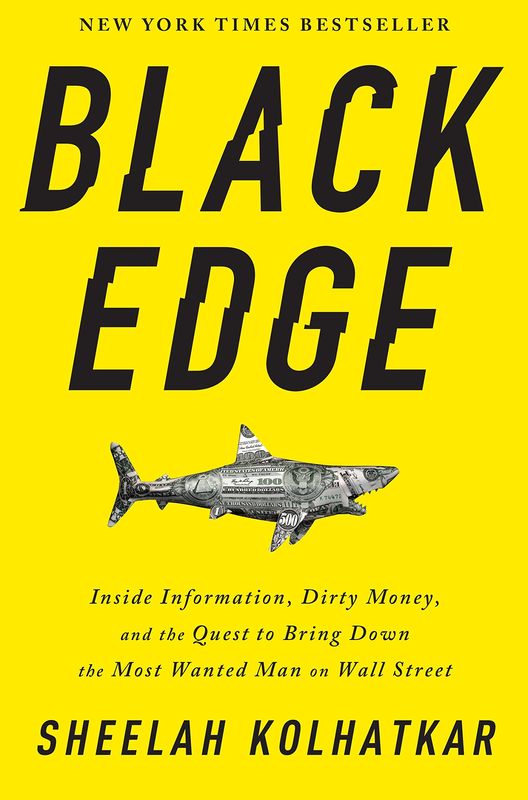
In "Black Edge," investigative journalist Sheelah Kolhatkar delves into the high-stakes world of hedge funds and the enigmatic figure of Steven A. Cohen. As she unravels the saga of insider trading, greed, and Wall Street's murky ethics, the book pulls readers into a gripping tale of ambition that spans decades. With intellectual prowess and audacious risk-taking, Cohen's rise to power raises questions about the moral compass of finance. Kolhatkar's penetrating analysis unveils the dark side of wealth and the relentless pursuit of success, leaving readers questioning the true cost of ambition. Will you dare to uncover the secrets of a financial titan and the shadowy underworld they inhabit?
Conspiracy Book Summary
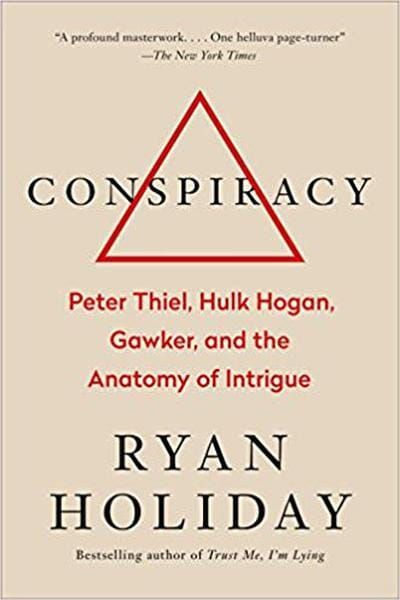
In "Conspiracy," a riveting exploration unfolds around one of the most infamous political scandals in American history. The narrative dives deep into the intricacies of power, betrayal, and the relentless pursuit of truth, following a cast of characters driven by ambition and fear. With shocking revelations and unexpected twists, the author challenges readers to question what they think they know about truth and deception. As allegiances shift and secrets are laid bare, the story reflects on the fine line between justice and vengeance. Prepare for a thought-provoking journey that will leave you pondering the shadows lurking behind every conspiracy.

Jonathan Strange and Mr Norrell Book Summary
In a world where magic is fading, two contrasting magicians, the reclusive Mr. Norrell and the daring Jonathan Strange, embark on a quest to revive English magic. Their alliance begins as a partnership rooted in ambition but soon spirals into rivalry as they uncover dark secrets and confront ancient forces. Strange's fervent desire to wield magic challenges the rigid traditions of Norrell, setting the stage for an epic battle of wits and wills. As their paths intertwine, they must navigate the perils of a world filled with faeries, lost knowledge, and the repercussions of power. Will their pursuit of greatness lead to salvation or destruction in a fantastical landscape where magic and reality collide?
The Pragmatic Programmer Book Summary
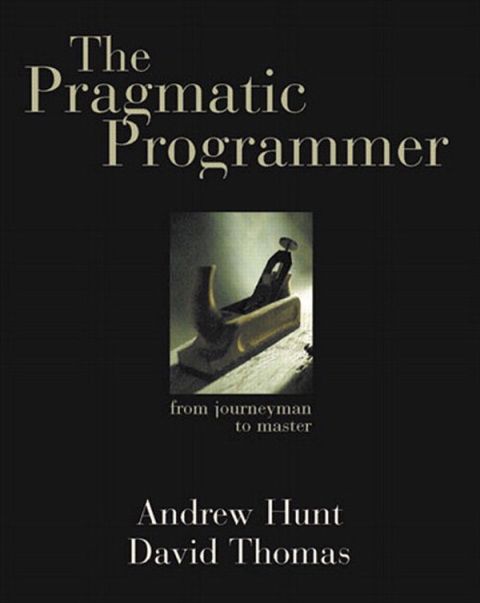
In "The Pragmatic Programmer," Andrew Hunt and David Thomas unveil the timeless principles and practices that empower developers to master their craft. Through captivating anecdotes and insightful tips, they challenge conventional programming wisdom, urging readers to embrace adaptability and continuous learning. The compelling emphasis on practical techniques, such as code craftsmanship and effective debugging, makes this a must-read for both seasoned pros and new coders. With its blend of philosophy and actionable advice, the book invites you to reflect on your own software development journey. Prepare to elevate your programming skills and become a more versatile developer—your future self will thank you!
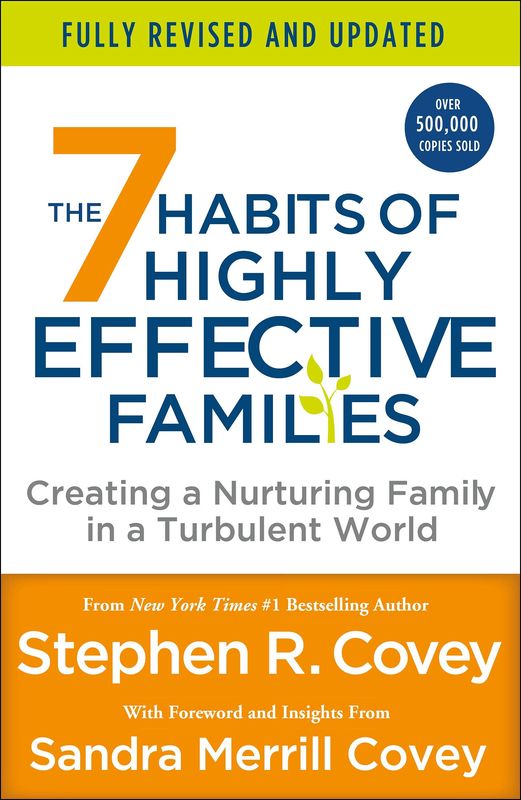
The 7 Habits of Highly Effective Families Book Summary
In "The 7 Habits of Highly Effective Families," Stephen R. Covey explores the timeless principles that foster strong family bonds and effective communication. Using insightful anecdotes and practical strategies, he guides readers through habits that encourage unity, mutual respect, and emotional resilience. Covey emphasizes the power of proactive choice and shared values in shaping a family's legacy. Whether navigating conflicts or celebrating victories, these habits serve as a roadmap for building lasting connections. Discover how to transform your family dynamics and create a legacy of love and effectiveness!

Preacher Book One Book Summary
In 'Preacher Book One,' an unconventional preacher named Jesse Custer embarks on a quest to find God after being possessed by a supernatural entity known as Genesis. Joined by his foul-mouthed ex-girlfriend Tulip and an Irish vampire named Cassidy, Jesse confronts a world filled with dark humor, moral ambiguity, and gothic violence. This gripping tale blends American mythology with existential questioning as the trio encounters various eccentric characters and dangerous foes. With themes of faith, redemption, and the search for meaning, the story challenges the very nature of divinity and humanity. Prepare for a wild ride that will leave you questioning everything you thought you knew about good and evil.
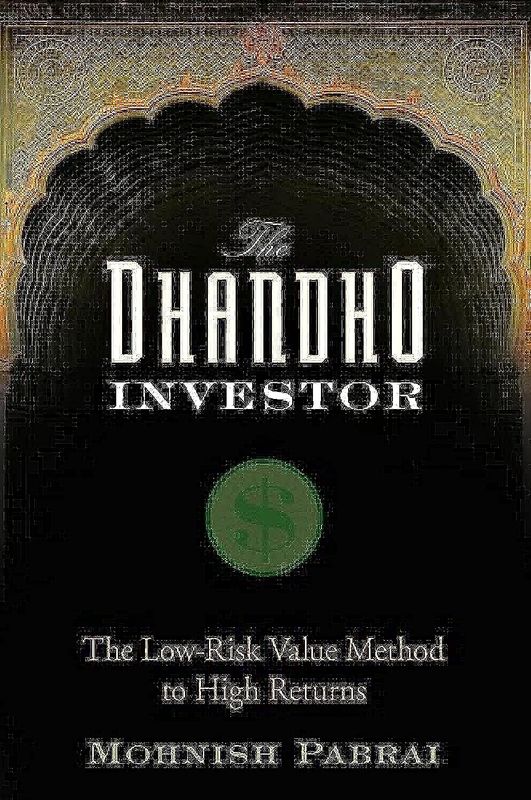
The Dhandho Investor Book Summary
In 'The Dhandho Investor', Mohnish Pabrai unveils the secrets of value investing through the lens of the Dhandho philosophy, rooted in the principles of Indian entrepreneurship. He emphasizes the importance of a low-risk, high-uncertainty approach that allows investors to maximize gains while minimizing potential losses. By sharing insightful anecdotes and the strategies of legendary investors like Warren Buffett and Charlie Munger, Pabrai encourages readers to rethink conventional investing wisdom. As he navigates the fascinating intersections of culture and finance, you'll discover how to harness the power of relentless focus and strategic decision-making. This book not only challenges your investment perspective but also invites you to question your own approach to wealth creation.
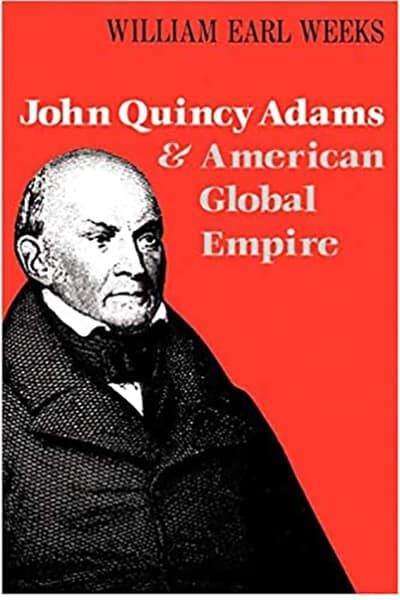
John Quincy Adams and American Global Empire Book Summary
In "John Quincy Adams and American Global Empire," William Earl Weeks unveils the complex ambitions of one of America's founding figures. The book chronicles Adams' vision of a robust and influential United States poised to make its mark on the world stage. Readers will discover how his diplomatic strategies and philosophical ideals shaped the nation's foreign policy during a pivotal era. Weeks artfully illustrates the interplay of personal conviction and political realities in Adams' quest for power. This compelling narrative invites readers to rethink the legacy of a man often overshadowed by his more famous contemporaries.
Showing 8 of 25 similar books
Take your reading experience to the next level
Download our mobile app to enjoy your favorite books on the go. Get access to exclusive features, offline listening, and personalized recommendations.

Similar Book Recommendations →

Lex Fridman's Book Recommendations
Lex Fridman is an artificial intelligence researcher, podcaster, and MIT professor, known for his work in autonomous vehicles, robotics, and deep learning. Fridman has gained widespread popularity through his podcast, Lex Fridman Podcast, where he interviews leading thinkers in science, technology, and philosophy, exploring topics like AI, consciousness, and the future of humanity. His academic work focuses on human-centered AI, aiming to create machines that can better understand and interact with humans. Fridman’s ability to distill complex topics into accessible conversations has earned him a large following, and his podcast is known for its thoughtful, in-depth discussions with some of the brightest minds of our time. He is also an advocate for the responsible development of AI, emphasizing the ethical implications of this rapidly advancing technology. Outside of academia and podcasting, Fridman is a practitioner of jiu-jitsu and frequently speaks about the importance of discipline and continuous learning.

Naval Ravikant's Book Recommendations
Naval Ravikant is an entrepreneur, angel investor, and philosopher, best known as the co-founder of AngelList, a platform that connects startups with investors. Ravikant is a prolific thinker and writer on topics such as startups, investing, and personal well-being, sharing his wisdom through essays, podcasts, and social media. He has invested in over 100 companies, including Uber, Twitter, and Yammer, making him one of Silicon Valley’s most successful angel investors. Ravikant is also known for his philosophical musings on wealth, happiness, and the meaning of life, which have garnered him a large and dedicated following.

Bret Victor's Book Recommendations
Bret Victor is a renowned American interface designer and computer scientist celebrated for his innovative contributions to interactive design and human-computer interaction. He is best known for creating dynamic, explorable explanations, which have significantly influenced the way educational content is presented and understood. Victor's seminal work, "Inventing on Principle," advocates for the integration of immediate feedback in creative processes, inspiring a new wave of interactive programming environments. As a former member of the Apple Human Interface team, he played a pivotal role in shaping modern user interfaces. Through his organization, Dynamicland, Victor continues to explore and expand the boundaries of immersive, collaborative computing environments.

Bryan Johnson's Book Recommendations
Bryan Johnson is an American entrepreneur, investor, and futurist, best known for founding Braintree, a payments company that was acquired by PayPal, and Kernel, a company focused on developing brain-computer interfaces. Johnson is deeply interested in advancing human cognition and longevity through technological innovation. His work at Kernel seeks to better understand the brain and its potential to enhance human intelligence. He is also the founder of OS Fund, which invests in companies tackling complex, world-changing problems in areas like health and energy. Johnson is a strong advocate for using technology to extend human potential and reshape the future of humanity.

Charlie Munger's Book Recommendations
Charlie Munger is an American investor, businessman, and philanthropist, best known as the vice chairman of Berkshire Hathaway, where he partners with Warren Buffett. Renowned for his insights on investment strategies and mental models, Munger has significantly influenced the world of finance. His notable literary contributions include "Poor Charlie's Almanack," a compilation of his speeches and writings that distill his wisdom on decision-making and business principles. Munger's work emphasizes the importance of multidisciplinary thinking and continuous learning. Beyond his financial acumen, he is celebrated for his charitable efforts, particularly in education and healthcare.

Barack Obama's Book Recommendations
Barack Obama is the 44th President of the United States, serving from 2009 to 2017. As the first African American president, Obama’s leadership marked a historic moment in American history. His administration focused on healthcare reform, economic recovery from the Great Recession, and environmental policies. He is best known for the Affordable Care Act, as well as his efforts to expand civil rights and restore diplomatic relations with Cuba. Since leaving office, Obama has continued to engage in public life through his foundation, focusing on leadership development, civic engagement, and global issues.

Jon Stewart's Book Recommendations
Jon Stewart is an American comedian, writer, and former host of The Daily Show, where he gained fame for his satirical take on news and politics. Stewart transformed The Daily Show into a critical voice in American media, blending humor with hard-hitting commentary on political and social issues. After stepping down from the show, Stewart has continued to advocate for causes like 9/11 first responders and veterans' rights. He is also a filmmaker, directing the political satire film Irresistible. Stewart remains a significant figure in American culture, known for his wit, activism, and influence on political discourse.

Reshma Saujani's Book Recommendations
Reshma Saujani is the founder of Girls Who Code, an organization aimed at closing the gender gap in technology by empowering young women to pursue careers in coding and computer science. She gained national attention in 2010 as the first Indian-American woman to run for U.S. Congress. Reshma is also the author of several books, including Brave, Not Perfect, which encourages women to embrace failure and take risks. Her TED Talk on teaching girls bravery rather than perfection has garnered millions of views. Reshma continues to advocate for gender equality and innovation in education.
Showing 8 of 19 related collections
“Scientific progress is not a gradual and cumulative process but rather a series of peaceful interludes punctuated by intellectually violent revolutions.”
The Structure of Scientific Revolutions
By Thomas S. Kuhn
Frequently Asked Questions
Explore Our Catalogue
Discover a world of knowledge through our extensive collection of book summaries.
Genres
Genres
Genres
Featured Collections
- Top Book Club Picks
- One-Stop Nutrition
- Summer Reads 2024
- Best Beach Reads 2024
- Work-Life Balance Guide
- Time Management
- Healthy Foods
- Entrepreneur Toolkit
- Mind & Body Wellness
- Future Tech Insights
- Leadership Essentials
- Financial Freedom
- Sci-Fi Masterpieces
- Parenting 101
- Books That Became Blockbusters
- Guide to a Healthy Pregnancy