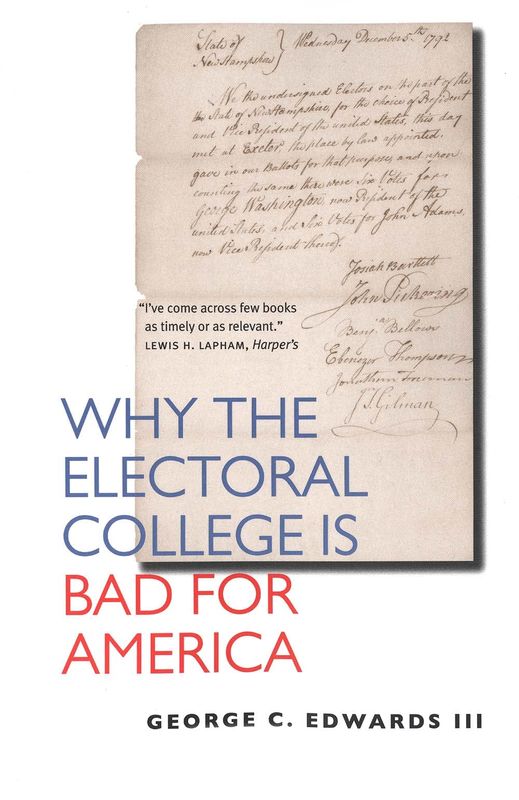
Why the Electoral College is Bad for America Book Summary
In 'Why the Electoral College is Bad for America,' George C. Edwards confronts the controversial mechanism that shapes presidential elections. He argues that the Electoral College distorts the democratic process, favoring certain states over others and undermining the principle of one person, one vote. Through compelling evidence and historical context, Edwards illustrates how this system can manipulate outcomes and disenfranchise voters. As he delves into potential reforms, he raises critical questions about the integrity of American democracy. Prepare to challenge your understanding of electoral fairness and rethink the roots of political representation.
By George C. Edwards
Published: 2005
"The Electoral College distorts the democratic process, hindering true representation and undermining the foundation of a government by the people."

Start Listening to Book Summary
Book Review of Why the Electoral College is Bad for America
A distinguished political scientist critiques arguments in favor of the electoral college and offers a persuasive argument for direct election of the president. “[With] excellent descriptions of how the electoral system actually works, [this] is the most cogent and up-todate criticism I have read.”—Alexander Keyssar, New York Review of Books “This crisp handbook . . . outlines the origins of the electoral college . . . and demonstrates the many ways it violates democratic norms.”—New Yorker “Timely [and] relevant. . . . [Edwards’s] principal lines of argument deserve extensive debate in both the news media and the Congress.”—Lewis H. Lapham, Harper’s “Compelling . . . [and] meticulous.”—Glenn C. Altschuler, New York Observer
Book Overview of Why the Electoral College is Bad for America
About the Book Author
George C. Edwards
George C. Edwards is a distinguished political scientist and author known for his extensive contributions to the understanding of American politics and public policy. His notable works include 'The American Presidency,' 'Why the Electoral College Is Bad for America,' and 'Overreach: Presidential Power and the Constitution.' Edwards is recognized for his clear, analytical writing style that makes complex political concepts accessible to both scholars and the general public. He has received numerous awards for his research and teaching, establishing himself as a leading voice in contemporary political analysis.
Book Details
Key information about the book.
- Authors
- George C. Edwards
- Published
- May 2005
- Publisher
- Yale University Press
- ISBN
- 0300109687
- Language
- English
- Pages
- 226
- Genres
- Political PhilosophyPolitical IdeologiesPolitical HistoryPolitics and Current Affairs
Purchase Options
 Buy on Amazon
 Buy via BookShop
Support local bookstores: BookShop gives a portion of each sale to independent bookshops!
Similar books you might like →
Conspiracy Book Summary
In "Conspiracy," a riveting exploration unfolds around one of the most infamous political scandals in American history. The narrative dives deep into the intricacies of power, betrayal, and the relentless pursuit of truth, following a cast of characters driven by ambition and fear. With shocking revelations and unexpected twists, the author challenges readers to question what they think they know about truth and deception. As allegiances shift and secrets are laid bare, the story reflects on the fine line between justice and vengeance. Prepare for a thought-provoking journey that will leave you pondering the shadows lurking behind every conspiracy.

The Long Goodbye Book Summary
In 'The Long Goodbye,' private detective Philip Marlowe finds himself drawn into a labyrinth of mystery and betrayal when his friend Terry Lennox is implicated in a murder. As Marlowe uncovers the truth, he wrestles with loyalty and disillusionment in a corrupt world. The novel explores themes of friendship, morality, and the complexities of human nature. With Chandler's signature hard-boiled prose, each page reveals the gritty underbelly of Los Angeles and the bittersweet nature of loss. Will Marlowe's pursuit of justice cost him everything?
Emergence of a Free Press Book Summary
No summary available
The Limits of State Action Book Summary
In 'The Limits of State Action', Wilhelm von Humboldt challenges the conventional role of government in individual lives, arguing for the primacy of personal freedom and self-development. He articulates a vision of a society where the state should limit its intervention, allowing individuals to flourish in their pursuits. Humboldt's philosophy emphasizes the importance of diverse experiences and the cultivation of individuality, inviting readers to rethink their views on authority and autonomy. With a blend of political philosophy and humanistic ideals, this work remains a profound exploration of the tension between freedom and governance. Dive in to discover how his insights resonate in today's debates about state overreach and personal liberty.
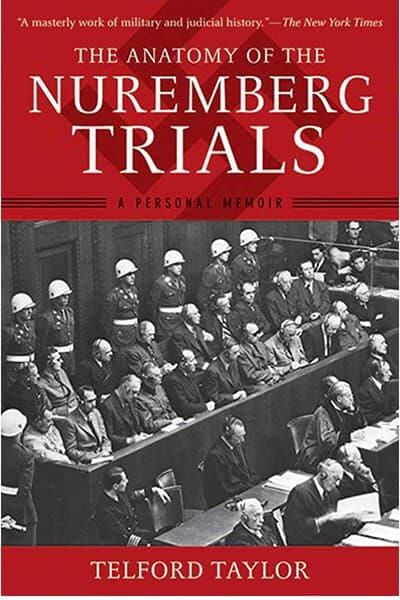
The Anatomy of the Nuremberg Trials Book Summary
In 'The Anatomy of the Nuremberg Trials', Telford Taylor offers a gripping account of the landmark proceedings that sought to bring Nazi war criminals to justice. With meticulous research and firsthand insights, he reveals the complexities and moral dilemmas faced by the tribunal. Taylor uncovers the profound implications of the trials on international law and human rights. As both a participant and a historian, his unique perspective sheds light on the often-overlooked challenges of legal accountability after atrocities. This compelling narrative invites readers to ponder the legacy of justice in a world plagued by unresolved conflicts.
Crises of Democracy Book Summary
In 'Crises of Democracy', Adam Przeworski explores the fragile foundations upon which democratic governments stand. He delves into the causes of contemporary democratic crises, revealing how economic inequality, political polarization, and eroding trust can destabilize societies. Przeworski offers a thought-provoking analysis of historical examples, prompting readers to consider whether democracy can survive in the face of these challenges. With a blend of political science insights and compelling narratives, the book invites reflection on the future of governance. Can democracy endure, or are we witnessing its twilight?
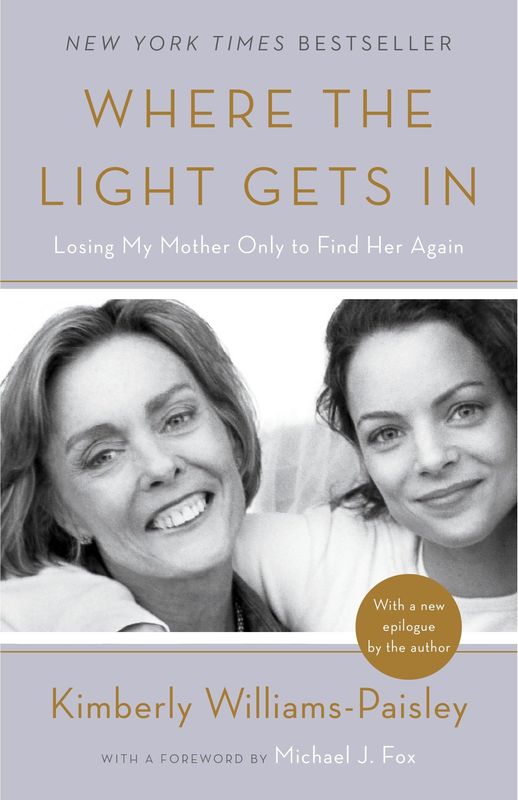
Where the Light Gets In Book Summary
In 'Where the Light Gets In', Kimberly Williams-Paisley explores the depth of family bonds, love, and resilience in the face of her mother's struggle with dementia. Through poignant reflections and heartfelt stories, she illustrates how joy and sorrow intertwine even in the darkest moments. The author’s candid narrative invites readers to confront their own fears and embrace the beauty of life’s fragility. This memoir not only captures the heart-wrenching reality of caregiving but also shines a light on the enduring power of connection. Prepare to be moved and inspired as Williams-Paisley shares her journey of loss and the light that comes with it.
21 Lessons for the 21st Century Book Summary
In '21 Lessons for the 21st Century', Yuval Noah Harari navigates the complex landscape of today's world, tackling urgent questions about our future. From the impact of technology on society to the challenges of political stability, each lesson provokes thought and introspection. Harari explores key themes such as the rise of artificial intelligence, the significance of data, and the importance of meaning in an increasingly uncertain world. With a blend of history, philosophy, and science, the book invites readers to reflect on their roles in shaping a shared future. Will we adapt, or become obsolete? Dive in to uncover the lessons that could redefine humanity's path.
Showing 8 of 28 similar books
Take your reading experience to the next level
Download our mobile app to enjoy your favorite books on the go. Get access to exclusive features, offline listening, and personalized recommendations.

Similar Book Recommendations →

Michael Pollan's Book Recommendations
Michael Pollan is a renowned American author and journalist, celebrated for his insightful explorations of food, agriculture, and human culture. His groundbreaking book, "The Omnivore's Dilemma," published in 2006, critically examines the complexities of the modern food industry and has become a seminal work in food studies. Pollan's engaging narrative style and thorough research have earned him a place on The New York Times Best Seller list multiple times. In addition to his literary contributions, he is also a professor of journalism at the University of California, Berkeley. Pollan's work continues to influence public discourse on sustainable eating and the ethical implications of food choices.

Alex Lieberman's Book Recommendations
Alex Lieberman is the co-founder and executive chairman of Morning Brew, a media company that delivers engaging business news. Under his leadership, Morning Brew has grown to reach millions of subscribers, becoming a significant player in modern business journalism. Lieberman is also known for his insightful commentary on entrepreneurship and media trends. His work has significantly influenced the way business news is consumed by younger audiences. Beyond Morning Brew, Lieberman frequently writes and speaks about the intersection of media and technology, further cementing his role as a thought leader in the industry.
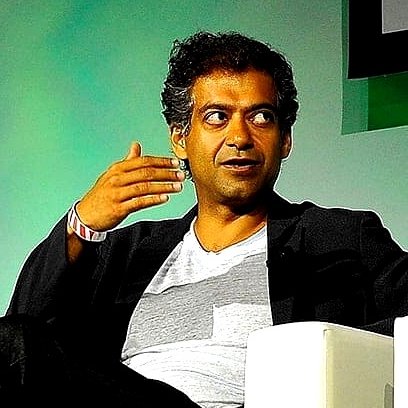
Naval Ravikant's Book Recommendations
Naval Ravikant is an entrepreneur, angel investor, and philosopher, best known as the co-founder of AngelList, a platform that connects startups with investors. Ravikant is a prolific thinker and writer on topics such as startups, investing, and personal well-being, sharing his wisdom through essays, podcasts, and social media. He has invested in over 100 companies, including Uber, Twitter, and Yammer, making him one of Silicon Valley’s most successful angel investors. Ravikant is also known for his philosophical musings on wealth, happiness, and the meaning of life, which have garnered him a large and dedicated following.

Ezra Klein's Book Recommendations
Ezra Klein is a prominent American journalist, political analyst, and author, renowned for his incisive commentary on politics and policy. He co-founded Vox, a widely respected news website known for its explanatory journalism, and served as its editor-in-chief. Klein's work includes the critically acclaimed book "Why We're Polarized," which delves into the deep-seated divisions in American politics. He also hosts "The Ezra Klein Show," a popular podcast where he interviews thought leaders from various fields. Klein's contributions have significantly shaped contemporary political discourse and media consumption.

Ray Dalio's Book Recommendations
Ray Dalio is the founder of Bridgewater Associates, one of the largest and most successful hedge funds in the world. He is also the author of the bestselling book Principles, where he outlines his philosophy on life, leadership, and investing. Ray is renowned for his unique approach to transparency, radical truth, and thoughtful disagreement within organizations. His insights into economics and investing have made him one of the most influential figures in the financial world. Dalio continues to be a thought leader in business, economics, and philanthropy.

Ana Fabrega's Book Recommendations
Ana Lorena Fabrega is an innovative educator and author passionate about reimagining education. Known as “Ms. Fab,” she is the Chief Evangelist at Synthesis, an education startup inspired by the problem-solving and collaboration model used at SpaceX. She advocates for alternative learning methods, encouraging curiosity and creativity in students. Ana's work emphasizes the importance of engaging young learners in real-world challenges and critical thinking. She also shares insights on education reform through her popular newsletter, Fab Fridays.

Audrey Gelman's Book Recommendations
Audrey Gelman is an American entrepreneur and writer, best known as the co-founder and former CEO of The Wing, a network of co-working spaces and social clubs designed for women. She has been recognized for her innovative approach to creating supportive environments for professional women, significantly impacting feminist discourse and workplace equality. Gelman has also contributed thought-provoking essays to prominent publications such as The New York Times and The New Yorker, where she discusses gender, politics, and culture. Her leadership at The Wing has been celebrated for fostering community and collaboration among women. Additionally, Gelman's influence extends to the political sphere, having previously worked as a press aide on several high-profile campaigns.

Ben Shapiro's Book Recommendations
Ben Shapiro is an American conservative political commentator, author, and lawyer, known for his sharp analytical skills and outspoken views. He graduated from UCLA at the age of 20 and Harvard Law School at 23, demonstrating his early intellectual prowess. Shapiro is the author of several best-selling books including "Bullies: How the Left's Culture of Fear and Intimidation Silences Americans" and "The Right Side of History: How Reason and Moral Purpose Made the West Great." He is the co-founder and editor emeritus of The Daily Wire, a popular conservative news and opinion website. Through his writing and media presence, Shapiro has significantly influenced contemporary political discourse in the United States.
Showing 8 of 21 related collections
“The Electoral College distorts the democratic process, hindering true representation and undermining the foundation of a government by the people.”
Why the Electoral College is Bad for America
By George C. Edwards
Frequently Asked Questions
Explore Our Catalogue
Discover a world of knowledge through our extensive collection of book summaries.
Genres
Genres
Genres
Featured Collections
- Top Book Club Picks
- One-Stop Nutrition
- Summer Reads 2024
- Best Beach Reads 2024
- Work-Life Balance Guide
- Time Management
- Healthy Foods
- Entrepreneur Toolkit
- Mind & Body Wellness
- Future Tech Insights
- Leadership Essentials
- Financial Freedom
- Sci-Fi Masterpieces
- Parenting 101
- Books That Became Blockbusters
- Guide to a Healthy Pregnancy