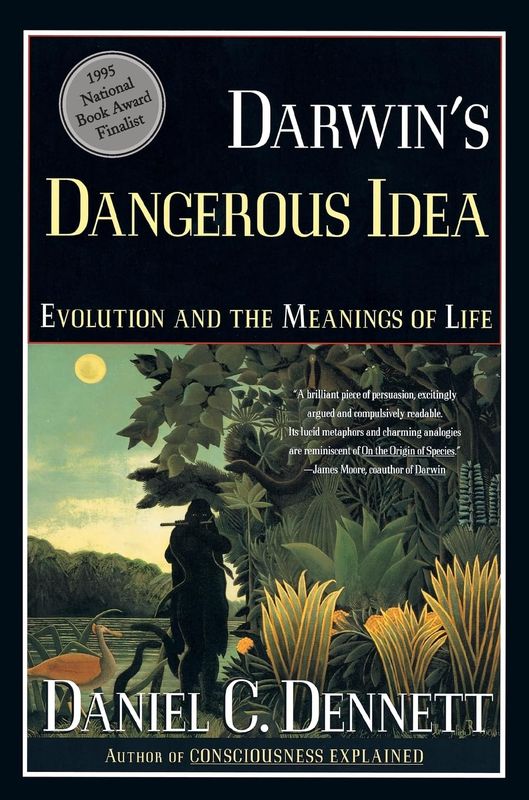

In 'Darwin's Dangerous Idea,' Daniel C. Dennett explores the profound implications of Darwinian evolution beyond biology, arguing that natural selection is a universal principle that shapes not only life but also culture and human thought. He challenges readers to consider how this radical idea influences the development of human societies and their philosophies. Dennett weaves together science, philosophy, and history, inviting us to rethink the very nature of humanity and consciousness. Through engaging anecdotes and rigorous argumentation, he assesses the risks and rewards of embracing this 'dangerous' idea. Will understanding evolution as a guiding principle reshape our worldviews and ethics?
By Daniel C. Dennett
Published: 1996
"The journey of understanding evolution is not just about the mechanisms of life, but an exploration of our place in the grand tapestry of existence, prompting us to reconsider the very nature of consciousness, free will, and what it means to be human."
Proponet of Charles Darwin's theory of evolution discusses how the idea has been distorted and the correct way to think about evolution, and examines challenges to the theory and its impact on the future of humans.
Showing 8 of 30 similar books
Bret Victor is a renowned American interface designer and computer scientist celebrated for his innovative contributions to interactive design and human-computer interaction. He is best known for creating dynamic, explorable explanations, which have significantly influenced the way educational content is presented and understood. Victor's seminal work, "Inventing on Principle," advocates for the integration of immediate feedback in creative processes, inspiring a new wave of interactive programming environments. As a former member of the Apple Human Interface team, he played a pivotal role in shaping modern user interfaces. Through his organization, Dynamicland, Victor continues to explore and expand the boundaries of immersive, collaborative computing environments.
Ray Dalio is the founder of Bridgewater Associates, one of the largest and most successful hedge funds in the world. He is also the author of the bestselling book Principles, where he outlines his philosophy on life, leadership, and investing. Ray is renowned for his unique approach to transparency, radical truth, and thoughtful disagreement within organizations. His insights into economics and investing have made him one of the most influential figures in the financial world. Dalio continues to be a thought leader in business, economics, and philanthropy.
Barack Obama is the 44th President of the United States, serving from 2009 to 2017. As the first African American president, Obama’s leadership marked a historic moment in American history. His administration focused on healthcare reform, economic recovery from the Great Recession, and environmental policies. He is best known for the Affordable Care Act, as well as his efforts to expand civil rights and restore diplomatic relations with Cuba. Since leaving office, Obama has continued to engage in public life through his foundation, focusing on leadership development, civic engagement, and global issues.
Jon Stewart is an American comedian, writer, and former host of The Daily Show, where he gained fame for his satirical take on news and politics. Stewart transformed The Daily Show into a critical voice in American media, blending humor with hard-hitting commentary on political and social issues. After stepping down from the show, Stewart has continued to advocate for causes like 9/11 first responders and veterans' rights. He is also a filmmaker, directing the political satire film Irresistible. Stewart remains a significant figure in American culture, known for his wit, activism, and influence on political discourse.
Nat Eliason is an influential writer, entrepreneur, and educator known for his insightful work on personal growth, productivity, and digital marketing. He founded Growth Machine, a successful SEO and content marketing agency that has helped numerous companies expand their online presence. Eliason's thought-provoking articles on his blog cover a wide range of topics, from philosophy to health, attracting a large and engaged audience. Additionally, he authored "Effortless Output with Roam," a comprehensive guide on using the Roam Research tool for knowledge management. Through his diverse contributions, Eliason has established himself as a significant voice in the realms of self-improvement and digital strategy.
David Deutsch is a British physicist and philosopher, widely known for his contributions to quantum mechanics, particularly in the area of quantum computation. He is the author of The Fabric of Reality and The Beginning of Infinity, where he explores the nature of knowledge, progress, and the future of human civilization. Deutsch’s work in quantum computing laid the groundwork for the development of quantum algorithms, positioning him as a pioneer in this emerging field. He is a proponent of the multiverse theory and has offered profound insights into the nature of reality, science, and human potential. Deutsch’s philosophical work emphasizes the power of reason and creativity in solving problems and expanding human understanding. His ideas have had a significant impact on the fields of theoretical physics and epistemology, making him a leading thinker on the future of science and technology. He continues to inspire both scientists and lay readers with his optimistic vision of a world shaped by knowledge and innovation.
David Friedberg is an entrepreneur, investor, and founder of The Production Board, a company focused on creating and investing in businesses that aim to solve challenges in food, agriculture, and climate change. Friedberg is also the founder of Climate Corporation, a company that uses data science to help farmers manage weather risk, which was acquired by Monsanto for $1 billion. He is a strong advocate for using technology to address global environmental and food production challenges. Friedberg’s focus on sustainability and innovation has made him a leader in the intersection of agriculture, climate science, and technology.
Peter Thiel is a renowned entrepreneur, venture capitalist, and author best known for co-founding PayPal and Palantir Technologies. He played a pivotal role in the early growth of Facebook as its first outside investor. Thiel's literary contributions include his influential book "Zero to One: Notes on Startups, or How to Build the Future," which offers insights into innovation, entrepreneurship, and the future of technology. A prominent figure in Silicon Valley, he has significantly impacted the tech industry's landscape through his investments and thought leadership. Thiel's work continues to inspire entrepreneurs and innovators around the world.
Showing 8 of 12 related collections
“The journey of understanding evolution is not just about the mechanisms of life, but an exploration of our place in the grand tapestry of existence, prompting us to reconsider the very nature of consciousness, free will, and what it means to be human.”
Darwin's Dangerous Idea
By Daniel C. Dennett
Discover a world of knowledge through our extensive collection of book summaries.
Daniel C. Dennett is an American philosopher, writer, and cognitive scientist, renowned for his work on philosophy of mind, science, and biology. He is a prominent figure in the field of evolutionary biology and consciousness studies. Dennett's notable works include 'Consciousness Explained,' 'Darwin's Dangerous Idea,' and 'Breaking the Spell: Religion as a Natural Phenomenon.' His writing is characterized by a clear, accessible style that engages both academic and general readers, often bridging the gap between complex scientific concepts and philosophical inquiry. Through his insightful exploration of the human mind and the nature of consciousness, Dennett contributes significantly to contemporary debates in philosophy and cognitive science.
Key information about the book.
 Buy on Amazon
 Buy via BookShop
Support local bookstores: BookShop gives a portion of each sale to independent bookshops!
In "A Brief History of Time," Stephen Hawking takes readers on a captivating journey through the cosmos, exploring the nature of time, black holes, and the universe's beginnings. With stunning clarity, he unravels complex scientific concepts, inviting everyone—from curious laypersons to seasoned physicists—to ponder the mysteries of existence. Hawking's charismatic storytelling challenges our perceptions of reality and time itself, posing profound questions about the universe's fate. As he merges science with philosophy, the reader is compelled to reflect on their place in a vast, enigmatic cosmos. Prepare to be inspired and awed by a narrative that transcends mere facts, pushing the boundaries of human understanding.
In 'Deep Simplicity', John Gribbin explores the profound connections between complexity and simplicity in the universe. Through captivating examples from physics and biology, he unveils how intricate systems can arise from simple rules. Gribbin challenges readers to rethink their understanding of chaos, order, and the patterns that govern existence. With an engaging narrative, he weaves together science and philosophy, inviting us to ponder the deeper meanings behind our complex world. Prepare to be intrigued by the seemingly paradoxical nature of life—where simplicity leads to complexity, and complexity reveals stunning simplicity.
In 'Introduction to Mathematical Philosophy,' Bertrand Russell takes readers on a fascinating journey through the foundations of mathematics and its philosophical implications. He explores concepts such as numbers, infinity, and the nature of mathematical truth, challenging conventional thinking. With his unique blend of clarity and insight, Russell demystifies complex ideas, revealing the profound connections between logic and mathematics. This thought-provoking work not only invites readers to rethink their understanding of numbers but also questions the very essence of reality itself. A must-read for anyone intrigued by the interplay of philosophy and mathematics, this book promises to expand your horizons.
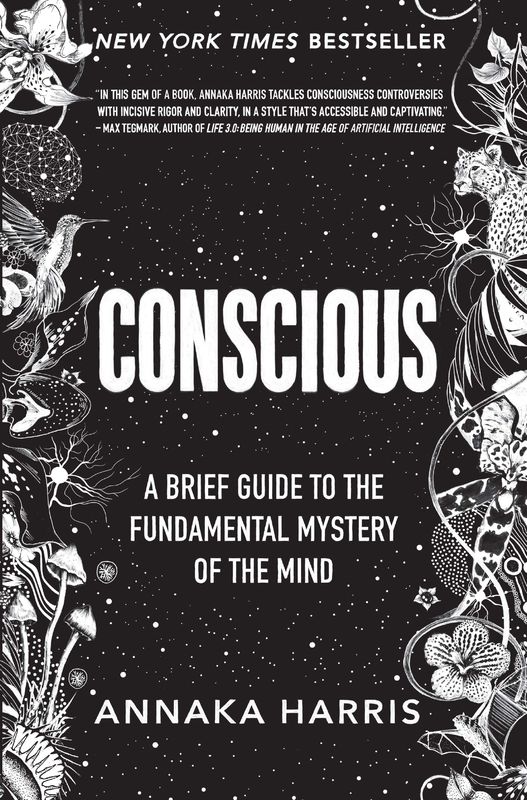
In 'Conscious,' Annaka Harris explores the enigmatic nature of consciousness, diving into profound questions about awareness and existence. Through a blend of science and philosophy, she challenges the conventional understanding, prompting readers to re-evaluate their perceptions of reality. Harris skillfully navigates the intricate relationship between the brain and subjective experience, shedding light on the mysteries that lie within. With thought-provoking insights and accessible prose, this book invites both the curious and the skeptical to ponder the depths of consciousness. Will you uncover the secrets of your own mind?
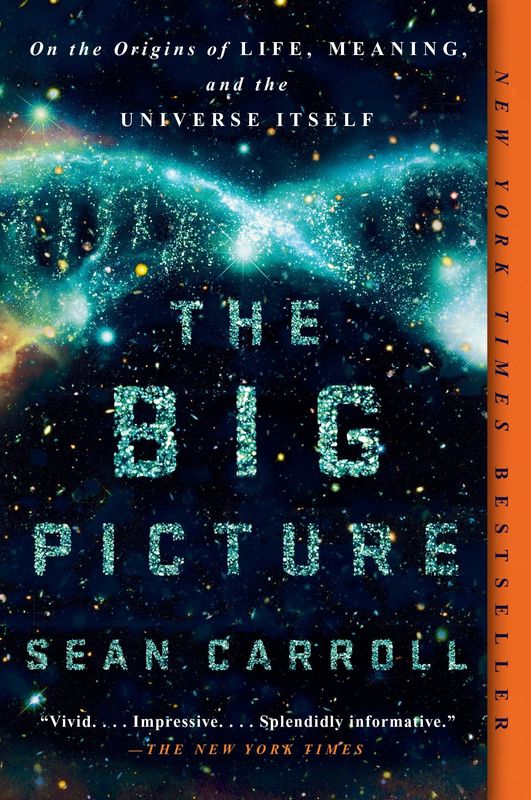
In 'The Big Picture', physicist Sean Carroll invites readers to explore the fascinating intersections of science, philosophy, and the meaning of life. He delves into the fundamental nature of reality, presenting complex concepts in a captivating and accessible manner. With a blend of narratives and profound insights, Carroll challenges us to consider our place in the universe. As he unravels the mysteries of existence, readers are urged to reflect on the implications of science for understanding consciousness and our everyday experiences. This thought-provoking journey leaves us questioning: what does it truly mean to be human in a cosmos governed by natural laws?
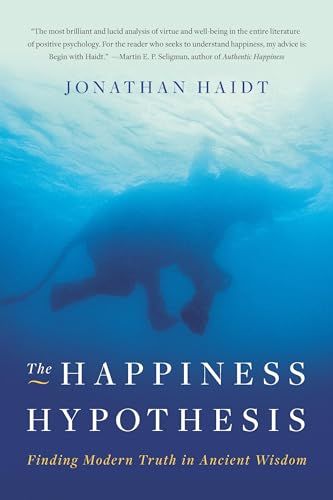
In 'The Happiness Hypothesis', Jonathan Haidt delves into the ancient wisdom of happiness, exploring how age-old philosophies intersect with modern psychology. He presents a compelling argument that our well-being can be influenced by both our external circumstances and internal beliefs. By examining ten great ideas from various cultures, Haidt reveals surprising insights about love, morality, and the meaning of life. This engaging blend of science and philosophy challenges readers to rethink what truly brings happiness. Are we mere puppets of our circumstances, or can we take charge of our own joy?
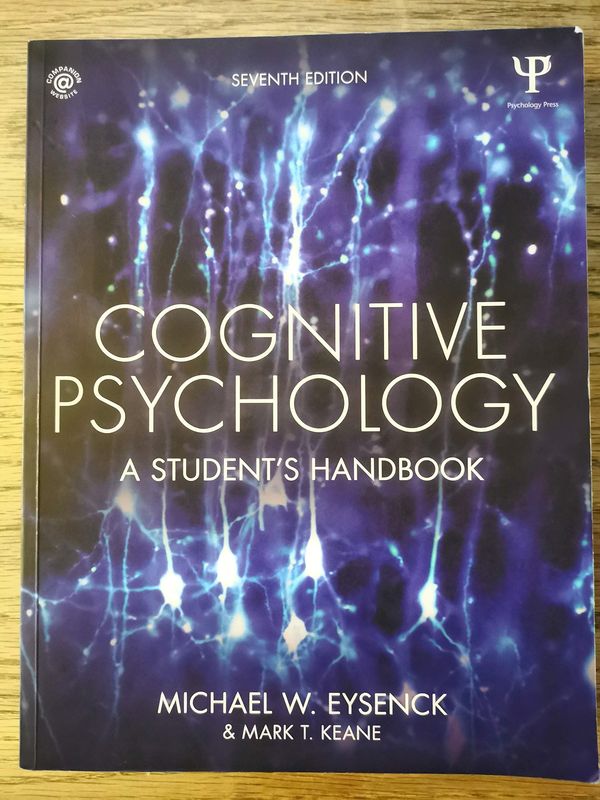
'Cognitive Psychology' by Michael W. Eysenck and Mark T. Keane offers a riveting exploration into the inner workings of the human mind. Delve into the fascinating processes of perception, memory, and decision-making that shape our everyday experiences. With cutting-edge research and real-world applications, the authors unravel the complexities of cognitive functions in a way that captivates both novices and seasoned scholars alike. Discover how cognitive psychology influences everything from learning strategies to emotional responses. This book invites you to unlock the mysteries of thought and behavior, igniting a deeper understanding of what it means to be human.
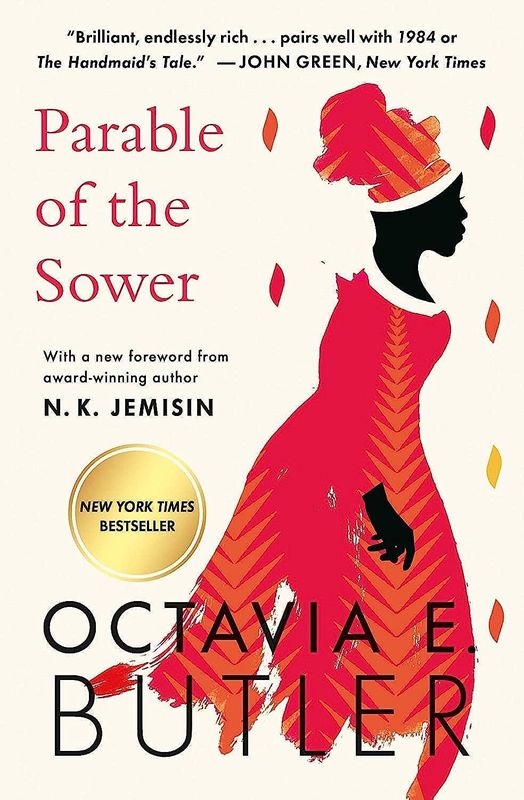
In a dystopian future ravaged by climate change and societal collapse, Lauren Olamina possesses a unique gift: hyper-empathy, the ability to feel others' pain. When her walled community is destroyed, she embarks on a perilous journey toward safety, guided by her vision of a new belief system called Earthseed. Along the way, Lauren faces brutal realities of survival, meets diverse companions, and confronts the harshness of humanity. As she navigates this treacherous world, her resilience and ideals are put to the test. Will Lauren's revolutionary philosophy provide hope for a better future, or will it be lost in the chaos?








Download our mobile app to enjoy your favorite books on the go. Get access to exclusive features, offline listening, and personalized recommendations.