Simulation and Its Discontents Book Summary
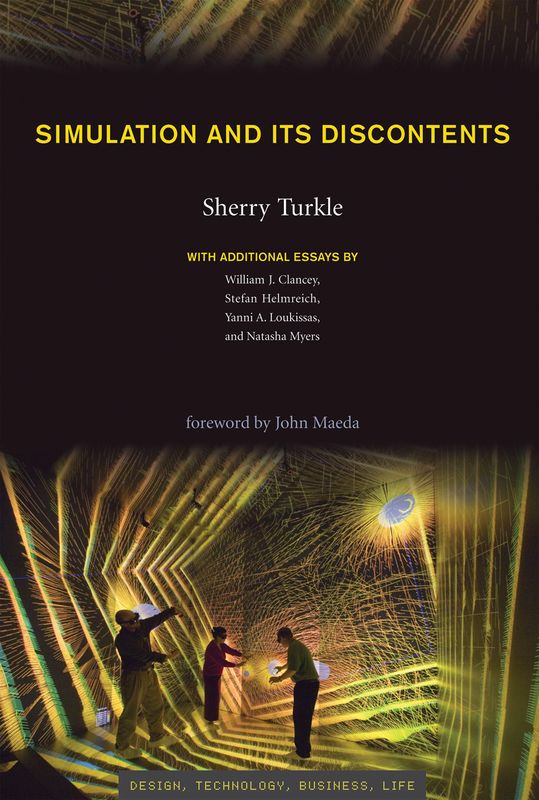
In 'Simulation and Its Discontents,' Sherry Turkle delves into the complexities and contradictions of a world increasingly mediated by technology. The book explores how simulations influence our social interactions and shape our identities in a digital landscape. Turkle raises thought-provoking questions about the implications of living in a reality where technology blurs the lines between the real and the virtual. Through captivating anecdotes and research, she reveals the psychological impact of our reliance on digital connections. This critical examination leaves readers pondering: are we more connected or disconnected in our simulated lives?
By Sherry Turkle
Published: 2009
""We are not only our ideas and our beliefs, but the ways we relate to others in the spaces we create—all the worlds we inhabit simultaneously shape who we are.""

Start Listening to Book Summary
Book Review of Simulation and Its Discontents
How the simulation and visualization technologies so pervasive in science, engineering, and design have changed our way of seeing the world. Over the past twenty years, the technologies of simulation and visualization have changed our ways of looking at the world. In Simulation and Its Discontents, Sherry Turkle examines the now dominant medium of our working lives and finds that simulation has become its own sensibility. We hear it in Turkle's description of architecture students who no longer design with a pencil, of science and engineering students who admit that computer models seem more “real” than experiments in physical laboratories. Echoing architect Louis Kahn's famous question, “What does a brick want?”, Turkle asks, “What does simulation want?” Simulations want, even demand, immersion, and the benefits are clear. Architects create buildings unimaginable before virtual design; scientists determine the structure of molecules by manipulating them in virtual space; physicians practice anatomy on digitized humans. But immersed in simulation, we are vulnerable. There are losses as well as gains. Older scientists describe a younger generation as “drunk with code.” Young scientists, engineers, and designers, full citizens of the virtual, scramble to capture their mentors' tacit knowledge of buildings and bodies. From both sides of a generational divide, there is anxiety that in simulation, something important is slipping away. Turkle's examination of simulation over the past twenty years is followed by four in-depth investigations of contemporary simulation culture: space exploration, oceanography, architecture, and biology.
Book Overview of Simulation and Its Discontents
About the Book Author
Sherry Turkle
Sherry Turkle is a renowned professor of the social studies of science and technology at MIT, as well as a clinical psychologist and author. Her notable works include 'Alone Together: Why We Expect More from Technology and Less from Each Other,' 'Reclaiming Conversation: The Power of Talk in a Digital Age,' and 'The Empathy Diaries,' where she explores the intricate relationship between humans and technology. Turkle's writing style blends academic rigor with accessibility, often using personal anecdotes and case studies to illustrate her points, making complex ideas relatable to a general audience.
Book Details
Key information about the book.
- Authors
- Sherry Turkle
- Published
- April 2009
- Publisher
- MIT Press
- ISBN
- 0262012707
- Language
- English
- Pages
- 233
- Genres
- Digital CommunicationSocial PsychologyPsychologyTechnology
Purchase Options
 Buy on Amazon
 Buy via BookShop
Support local bookstores: BookShop gives a portion of each sale to independent bookshops!
Similar books you might like →
The Righteous Mind Book Summary
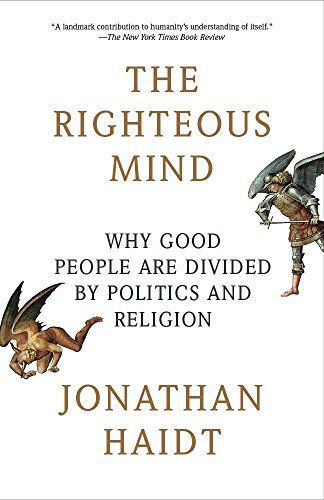
In 'The Righteous Mind', Jonathan Haidt explores the intricacies of human morality and its impact on political divisions. He argues that our sense of right and wrong is shaped more by intuition than by reason, leading to deep-seated clashes between differing moral perspectives. Using insights from psychology, sociology, and anthropology, Haidt delves into the reasons why people hold vastly opposing views despite sharing the same facts. The book encourages readers to understand, rather than vilify, opposing beliefs, making it a compelling read for anyone seeking to navigate the complexities of modern discourse. It challenges us to reconsider our moral frameworks and opens the door to greater empathy in an increasingly polarized world.
The Social Animal Book Summary
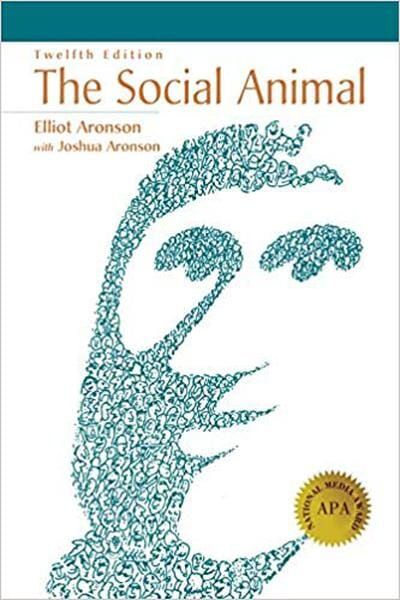
In 'The Social Animal', Joshua and Elliot Aronson explore the psychological and social forces shaping human behavior through rich anecdotes and groundbreaking research. The authors take readers on a journey through the intricacies of love, hate, and the powerful influence of social contexts on individual decisions. Juxtaposing captivating storytelling with scientific insights, they unravel the complexities of conformity, prejudice, and self-identity. This thought-provoking exploration challenges our understanding of what it means to be human in a social world. Prepare to question your beliefs and see the connections between psychology and everyday life like never before.

12 Rules for Life Book Summary
In '12 Rules for Life', psychologist Jordan B. Peterson distills life lessons from psychology, philosophy, and mythology into twelve profound principles for personal growth. Each rule invites readers to confront the chaos of existence and embrace responsibility, guiding them toward meaning and order. Peterson's compelling narratives and incisive insights challenge conventional wisdom, urging self-reflection and accountability. As readers navigate through the complexities of life, they discover how to build a stable foundation for themselves and their communities. This thought-provoking book promises to provoke deep contemplation and inspire transformative change.
Confidence Game Book Summary
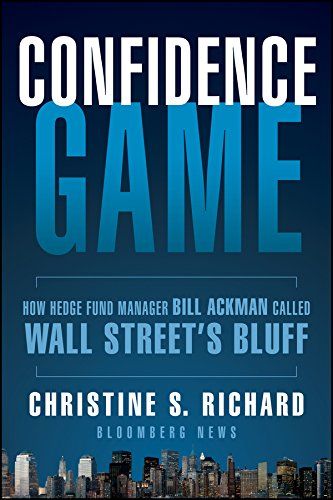
In 'Confidence Game', Christine S. Richard explores the intricate world of con artists and the psychology behind their manipulative tactics. Through gripping narratives and real-life examples, she unveils how trust can be both a weapon and a tool for deception. The book dives deep into the profiles of scammers and the unsuspecting victims who fall prey to their schemes. As Richard distinguishes between genuine confidence and deceitful charm, readers are left questioning their own perceptions of trust. This thrilling exploration of manipulation will make you rethink the nature of confidence itself.
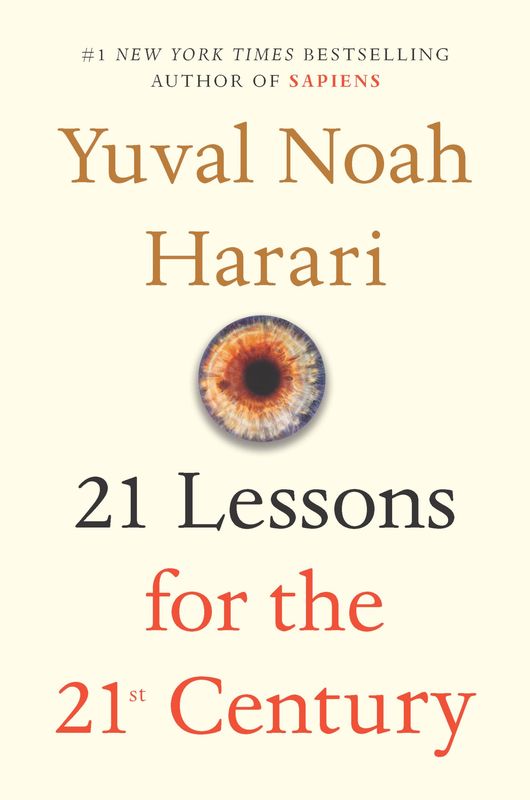
21 Lessons for the 21st Century Book Summary
In '21 Lessons for the 21st Century', Yuval Noah Harari navigates the complex landscape of today's world, tackling urgent questions about our future. From the impact of technology on society to the challenges of political stability, each lesson provokes thought and introspection. Harari explores key themes such as the rise of artificial intelligence, the significance of data, and the importance of meaning in an increasingly uncertain world. With a blend of history, philosophy, and science, the book invites readers to reflect on their roles in shaping a shared future. Will we adapt, or become obsolete? Dive in to uncover the lessons that could redefine humanity's path.

Love and Sex with Robots Book Summary
In 'Love and Sex with Robots,' David Levy explores the provocative intersection of technology and human relationships, envisioning a future where intimate connections with robots could reshape society. He delves into the psychology behind these relationships, posing challenging questions about love, attraction, and the essence of humanity. As AI evolves, Levy raises the possibility that we may one day experience genuine emotional bonds with machines. The book teases out the implications of this phenomenon on our understanding of love and intimacy. Prepare to challenge your perceptions of relationships in a world where boundaries between human and artificial blur.
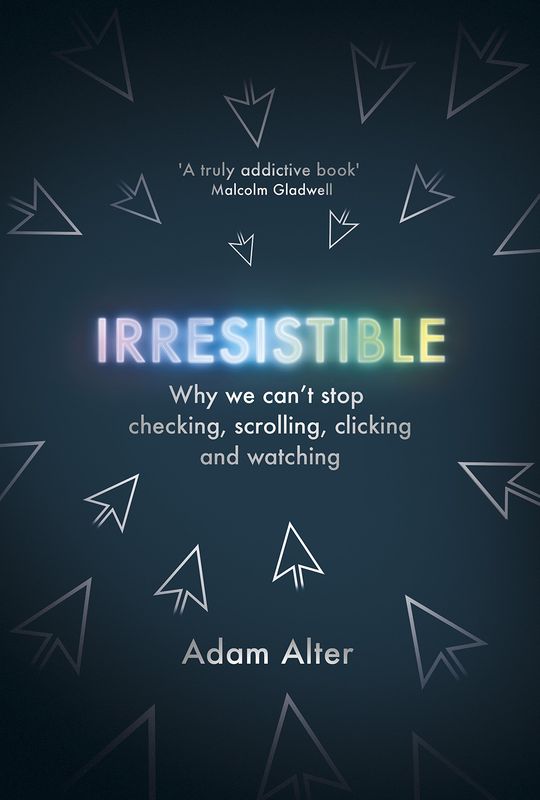
Irresistible Book Summary
In 'Irresistible', Adam Alter reveals the compelling forces behind our obsession with technology and the addictive nature of modern distractions. He uncovers how these influences manipulate our behaviors, often leading us to make choices we later regret. As he dissects the psychology of addiction, Alter offers eye-opening insights that question our relationship with screens and social media. This book isn’t just about technology; it’s a wake-up call to reclaim our attention and prioritize what truly matters. Prepare to rethink your daily habits and discover the keys to enjoying a more fulfilling life.
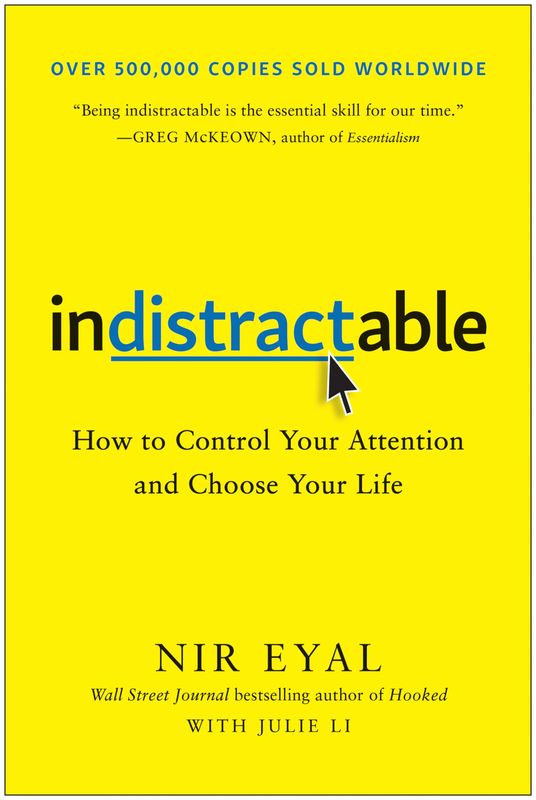
Indistractable Book Summary
In 'Indistractable', Nir Eyal uncovers the hidden psychology behind distraction and how our modern environment plays a role in it. He offers practical strategies to reclaim focus, emphasizing that becoming indistractable is not about elimination of all distractions, but about managing them effectively. With compelling anecdotes and scientific research, Eyal shows readers how to align their actions with their values and objectives. The journey toward greater productivity is not merely about willpower; it's about understanding the triggers that lead us astray. Could mastering the art of focus lead to a more fulfilled life?
Showing 8 of 30 similar books
Take your reading experience to the next level
Download our mobile app to enjoy your favorite books on the go. Get access to exclusive features, offline listening, and personalized recommendations.

Similar Book Recommendations →
Naval Ravikant's Book Recommendations
Naval Ravikant is an entrepreneur, angel investor, and philosopher, best known as the co-founder of AngelList, a platform that connects startups with investors. Ravikant is a prolific thinker and writer on topics such as startups, investing, and personal well-being, sharing his wisdom through essays, podcasts, and social media. He has invested in over 100 companies, including Uber, Twitter, and Yammer, making him one of Silicon Valley’s most successful angel investors. Ravikant is also known for his philosophical musings on wealth, happiness, and the meaning of life, which have garnered him a large and dedicated following.

Bret Victor's Book Recommendations
Bret Victor is a renowned American interface designer and computer scientist celebrated for his innovative contributions to interactive design and human-computer interaction. He is best known for creating dynamic, explorable explanations, which have significantly influenced the way educational content is presented and understood. Victor's seminal work, "Inventing on Principle," advocates for the integration of immediate feedback in creative processes, inspiring a new wave of interactive programming environments. As a former member of the Apple Human Interface team, he played a pivotal role in shaping modern user interfaces. Through his organization, Dynamicland, Victor continues to explore and expand the boundaries of immersive, collaborative computing environments.

Biz Stone's Book Recommendations
Biz Stone is an American entrepreneur, co-founder of Twitter, and a key figure in the development of social media. Stone helped launch Twitter in 2006, transforming the way people communicate and share information globally. He has also co-founded other companies, including Xanga, Blogger, and Medium, and is involved in various philanthropic efforts through The Biz and Livia Stone Foundation. Stone is known for his creative thinking and his belief in the power of technology to create positive change in the world. His work has left a lasting impact on digital communication and media innovation.

Morgan Housel's Book Recommendations
Morgan Housel is a financial writer and partner at The Collaborative Fund, best known for his book The Psychology of Money. His work explores the behavioral side of finance, emphasizing how emotions, history, and decision-making impact wealth-building. Housel’s writing is widely praised for being accessible, insightful, and engaging, making complex financial topics easier to understand. He contributes regularly to financial publications and speaks at conferences on the power of long-term thinking in finance. His book has become a modern classic in the personal finance genre.
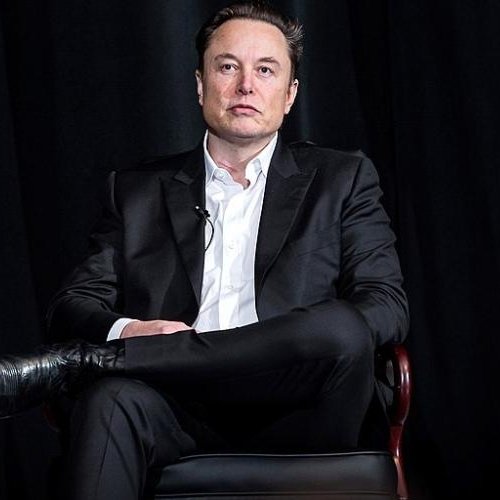
Elon Musk's Book Recommendations
Elon Musk is an influential entrepreneur and innovator known for founding and leading several groundbreaking companies, including Tesla, SpaceX, Neuralink, and The Boring Company. He has played a pivotal role in advancing electric vehicles, space exploration, and renewable energy. Musk's vision extends to colonizing Mars and reducing the risk of human extinction through space travel. In addition to his technological contributions, he has co-authored the book "Spacex: Making Commercial Spaceflight a Reality," providing insights into his ambitious projects and vision for the future. Musk's relentless pursuit of innovation continues to shape the trajectory of multiple industries.
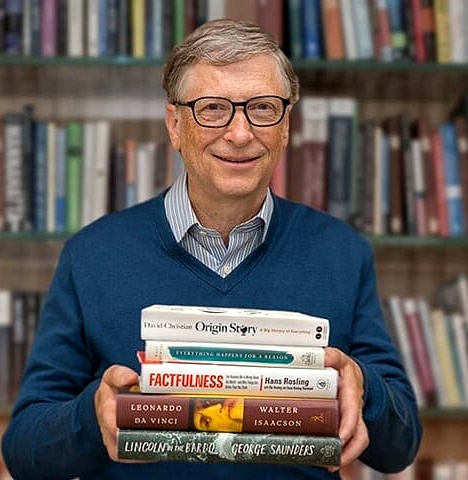
Bill Gates's Book Recommendations
Bill Gates, co-founder of Microsoft Corporation, is a pioneering figure in the tech industry, having played a key role in the personal computer revolution. His work at Microsoft, particularly the development of Windows, transformed software and computing globally. Beyond his technology contributions, Gates is also a prolific author, with notable works such as "The Road Ahead" and "Business @ the Speed of Thought," which offer insights into the future of technology and business. Additionally, his philanthropic efforts through the Bill & Melinda Gates Foundation have had a profound impact on global health, education, and poverty. Gates continues to influence both technology and literature with his forward-thinking perspectives and innovative ideas.

Alfred Lin's Book Recommendations
Alfred Lin is a venture capitalist and partner at Sequoia Capital, where he focuses on investments in consumer internet, enterprise, and mobile companies. Lin is known for his early investments in companies like Airbnb and DoorDash, helping them grow into major global brands. Before joining Sequoia, Lin was an executive at Zappos, where he worked closely with CEO Tony Hsieh to develop the company’s innovative culture and customer service model. Lin’s expertise in scaling businesses and his strategic vision have made him one of the most respected venture capitalists in Silicon Valley.

Dennis Prager's Book Recommendations
Dennis Prager is an American conservative radio talk show host, writer, and public speaker, best known for his influential role in broadcasting and his extensive contributions to political commentary. He co-founded PragerU, a non-profit organization that produces short educational videos on various topics, which has garnered millions of views worldwide. As an author, Prager has written several best-selling books, including "Still the Best Hope," "The Rational Bible," and "Happiness Is a Serious Problem." His works often explore themes of religion, morality, and American values. Additionally, Prager's columns and essays have been widely published, solidifying his status as a prominent voice in contemporary conservative thought.
Showing 8 of 14 related collections
“"We are not only our ideas and our beliefs, but the ways we relate to others in the spaces we create—all the worlds we inhabit simultaneously shape who we are."”
Simulation and Its Discontents
By Sherry Turkle
Frequently Asked Questions
Explore Our Catalogue
Discover a world of knowledge through our extensive collection of book summaries.
Genres
Genres
Genres
Featured Collections
- Top Book Club Picks
- One-Stop Nutrition
- Summer Reads 2024
- Best Beach Reads 2024
- Work-Life Balance Guide
- Time Management
- Healthy Foods
- Entrepreneur Toolkit
- Mind & Body Wellness
- Future Tech Insights
- Leadership Essentials
- Financial Freedom
- Sci-Fi Masterpieces
- Parenting 101
- Books That Became Blockbusters
- Guide to a Healthy Pregnancy