The Large Scale Structure of Space-Time Book Summary
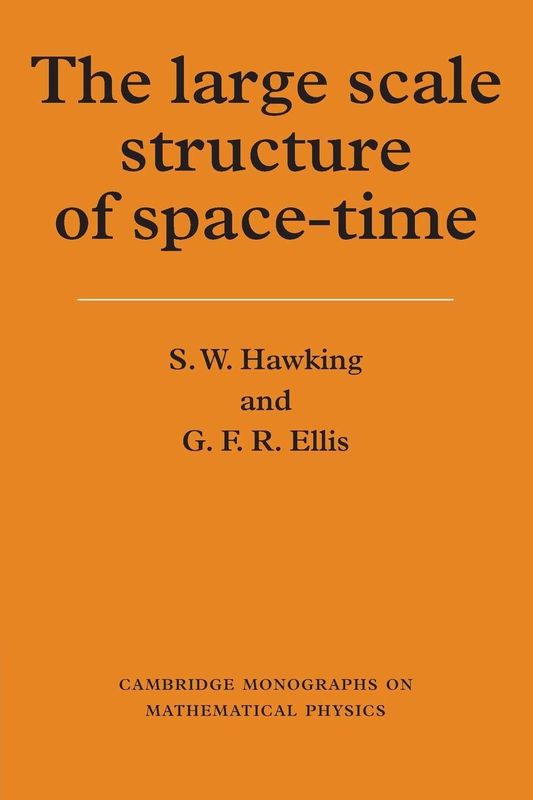
Dive into the profound depths of the universe with 'The Large Scale Structure of Space-Time' by Stephen Hawking and G. F. R. Ellis. This groundbreaking work explores the intricate fabric of space and time, revealing how they intertwine to shape the cosmos. Through mathematical rigor and theoretical insights, the authors challenge our understanding of gravity, black holes, and the beginning of the universe. What mysteries lie at the edges of black holes? Prepare to rethink everything you know about the very nature of reality in this intellectual adventure.
By Stephen Hawking, G. F. R. Ellis
Published: 1973
"The universe does not have a center; it is self-contained and expands endlessly, revealing the intricate tapestry of dimensions that govern the cosmos."

Start Listening to Book Summary
Book Review of The Large Scale Structure of Space-Time
This 1973 book discusses Einstein's General Theory of Relativity and its predictions concerning black holes and singularities in space-time itself.
Book Overview of The Large Scale Structure of Space-Time
About the Book Authors
Stephen Hawking
Stephen Hawking was a renowned theoretical physicist and cosmologist, best known for his groundbreaking contributions to the understanding of black holes and the nature of the universe. Born on January 8, 1942, in Oxford, England, he faced the challenges of amyotrophic lateral sclerosis (ALS) but continued to work and inspire others through his research and writings. His most famous book, "A Brief History of Time," became an international bestseller, making complex scientific concepts accessible to the general public. Hawking held the position of Lucasian Professor of Mathematics at the University of Cambridge for over 30 years, significantly influencing the field of theoretical physics. He passed away on March 14, 2018, leaving behind a legacy of scientific curiosity and a profound impact on our understanding of the cosmos.
G. F. R. Ellis
G. F. R. Ellis is a distinguished author known for his profound contributions to contemporary literature, particularly in the genres of science fiction and fantasy. His notable works include 'The Quantum Mirage' and 'Echoes of the Future', both of which have garnered critical acclaim for their imaginative storytelling and intricate world-building. Ellis's writing style is characterized by a seamless blend of rich narrative and philosophical exploration, challenging readers to ponder the complexities of existence and technology. With a background in physics, he often integrates scientific concepts into his narratives, making his stories not only entertaining but also thought-provoking.
Book Details
Key information about the book.
- Authors
- Stephen Hawking, G. F. R. Ellis
- Published
- January 1973
- Publisher
- Cambridge University Press
- ISBN
- 0521099064
- Language
- English
- Pages
- 406
- Genres
- Physics and AstronomyScience and Nature
Purchase Options
 Buy on Amazon
 Buy via BookShop
Support local bookstores: BookShop gives a portion of each sale to independent bookshops!
Similar books you might like →
A Brief History of Time Book Summary
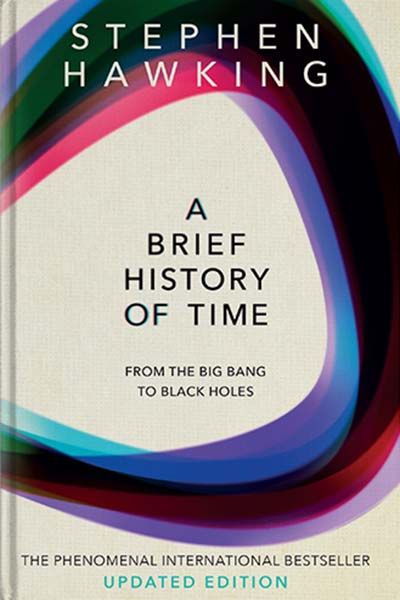
In "A Brief History of Time," Stephen Hawking takes readers on a captivating journey through the cosmos, exploring the nature of time, black holes, and the universe's beginnings. With stunning clarity, he unravels complex scientific concepts, inviting everyone—from curious laypersons to seasoned physicists—to ponder the mysteries of existence. Hawking's charismatic storytelling challenges our perceptions of reality and time itself, posing profound questions about the universe's fate. As he merges science with philosophy, the reader is compelled to reflect on their place in a vast, enigmatic cosmos. Prepare to be inspired and awed by a narrative that transcends mere facts, pushing the boundaries of human understanding.
Astrophysics for People in a Hurry Book Summary
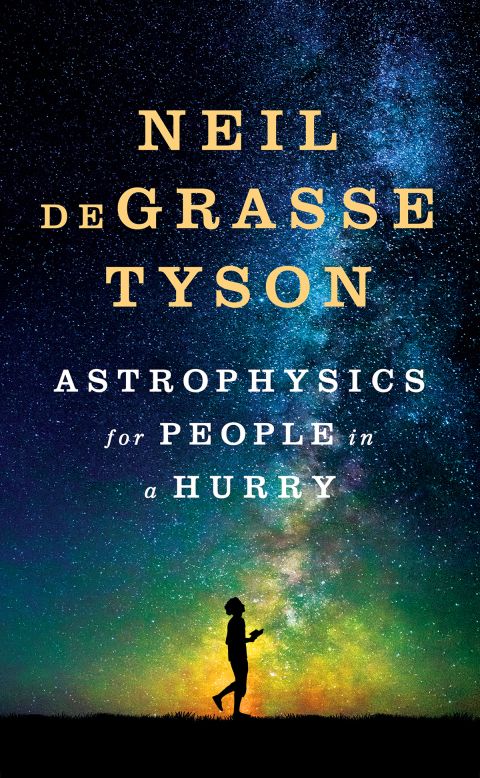
In "Astrophysics for People in a Hurry," Neil deGrasse Tyson takes readers on a whirlwind journey through the cosmos, unveiling the complex wonders of the universe in bite-sized pieces. He distills complex theories about black holes, dark matter, and the Big Bang into accessible narratives that spark curiosity and awe. With his signature wit and clarity, Tyson makes the grand tapestry of the universe relatable, inviting readers to ponder their place within it. This captivating exploration not only enlightens but also ignites a sense of wonder about the infinite possibilities of existence. Are you ready to embrace the mysteries of the universe, one brief chapter at a time?

Kurdistan Book Summary
In 'Kurdistan', Jonathan C. Randal explores the rugged beauty and complex political landscape of the Kurdish region, often overlooked in the annals of Middle Eastern history. Through a rich tapestry of personal narratives and historical accounts, Randal invites readers into the heart of a people yearning for identity and autonomy. The book delves into the struggles of the Kurds against oppression while highlighting their vibrant culture and resilience. As Randal traverses the storied landscapes and tumultuous political terrains, he raises poignant questions about nationhood and the human spirit. This compelling narrative promises to unravel the often-misunderstood saga of the Kurds, igniting a deeper curiosity about a region in the midst of change.

Concepts of Particle Physics Book Summary
No summary available
General Relativity for Mathematicians Book Summary
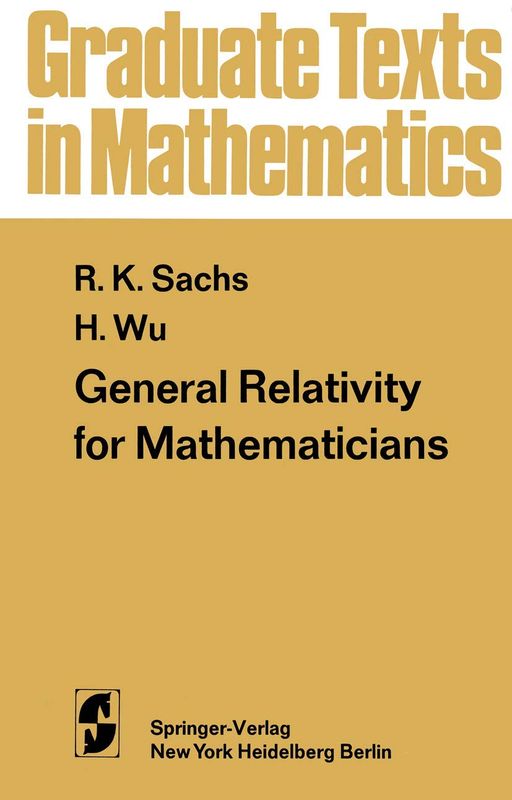
Dive into the fascinating world of 'General Relativity for Mathematicians,' where the elegance of mathematics meets the mysteries of the universe. Authors R.K. Sachs and H.-H. Wu unravel complex concepts with clarity, making groundbreaking theories accessible to those with a keen mathematical mind. Explore the geometric intricacies of spacetime and the interplay between gravity and curvature through rigorous yet engaging explanations. Each chapter builds on the last, inviting readers to challenge their understanding and expand their horizons. Perfect for mathematicians and curious minds alike, this book promises a profound journey through the fabric of reality.
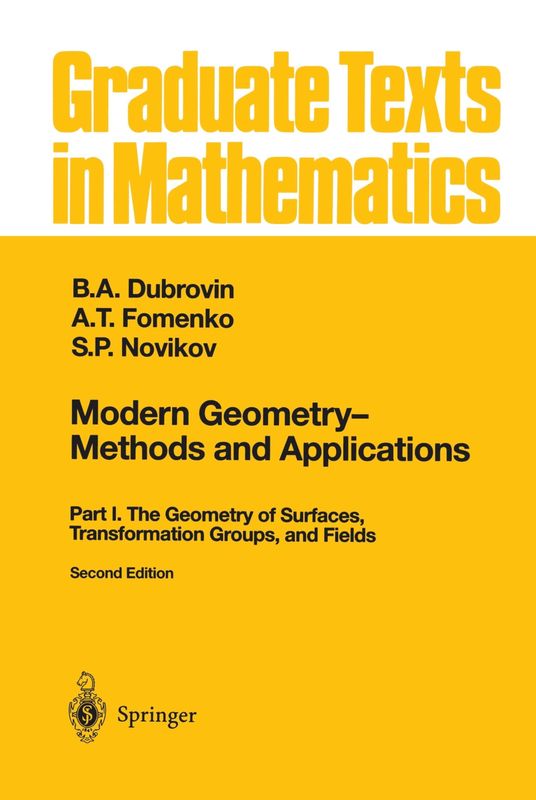
Modern Geometry — Methods and Applications Book Summary
Dive into the realm of Modern Geometry with Dubrovin, Fomenko, and Novikov as they unravel complex concepts using innovative methods. This book not only presents the intricacies of geometrical theories but also highlights their multifaceted applications in contemporary science and technology. With engaging examples and profound insights, it invites readers to explore the aesthetic beauty of geometric structures. Whether a novice or seasoned mathematician, the text promises to reshape your understanding of spatial relationships. Prepare for a thrilling intellectual journey that challenges perceptions and ignites curiosity.
Analysis, Manifolds and Physics Revised Edition Book Summary
Dive into 'Analysis, Manifolds and Physics,' a compelling fusion of mathematical concepts and their physical implications. This revised edition masterfully elucidates the intricate relationships between analysis, geometry, and the laws of physics. With expertly crafted examples and clear explanations, it guides readers through the complexities of manifolds and their applications in modern physics. Ideal for both aspiring mathematicians and physicists, it challenges conventional perspectives and ignites curiosity about the underlying structures of the universe. Are you ready to unravel the mathematical tapestry that shapes our understanding of reality?
Grand Unified Theories Book Summary
No summary available
Showing 8 of 19 similar books
Take your reading experience to the next level
Download our mobile app to enjoy your favorite books on the go. Get access to exclusive features, offline listening, and personalized recommendations.

Similar Book Recommendations →

Chris Dixon's Book Recommendations
Chris Dixon is a notable venture capitalist and technology entrepreneur, best known for his influential role as a general partner at Andreessen Horowitz, where he leads investments in cryptocurrency and blockchain technology. Before joining the firm, Dixon co-founded two startups: SiteAdvisor, a web security company acquired by McAfee, and Hunch, a recommendation engine acquired by eBay. In addition to his investment career, Dixon is a prolific writer and thought leader on technology and innovation, contributing insightful essays and articles to various platforms such as his personal blog and Medium. His writings often explore the future of technology, the internet, and the impact of blockchain, making significant contributions to contemporary tech literature. Dixon's work has earned him recognition as a visionary in both the tech and literary worlds.

Naval Ravikant's Book Recommendations
Naval Ravikant is an entrepreneur, angel investor, and philosopher, best known as the co-founder of AngelList, a platform that connects startups with investors. Ravikant is a prolific thinker and writer on topics such as startups, investing, and personal well-being, sharing his wisdom through essays, podcasts, and social media. He has invested in over 100 companies, including Uber, Twitter, and Yammer, making him one of Silicon Valley’s most successful angel investors. Ravikant is also known for his philosophical musings on wealth, happiness, and the meaning of life, which have garnered him a large and dedicated following.

Joe Rogan's Book Recommendations
Joe Rogan is a multifaceted American entertainer known primarily for his work as a comedian, podcast host, and commentator. He gained widespread recognition through his immensely popular podcast, "The Joe Rogan Experience," which has featured in-depth conversations with a diverse array of guests, including scientists, celebrities, and politicians. Though not primarily known for literature, Rogan has contributed to the field with his thought-provoking discussions that often explore philosophical and intellectual ideas. Additionally, he has authored the book "Mastering the Rubber Guard," which delves into Brazilian Jiu-Jitsu techniques, showcasing his expertise in martial arts. Rogan's influence extends beyond traditional media, impacting contemporary discourse through his unique blend of humor, curiosity, and critical thinking.

Patrick Collison's Book Recommendations
Patrick Collison is an Irish entrepreneur and co-founder of Stripe, a global technology company that enables businesses to accept online payments. Along with his brother John, Patrick has transformed Stripe into one of the most valuable private tech companies in the world. Stripe’s innovative approach to online payments has made it a key player in the financial technology space. Collison is known for his deep interest in science, technology, and policy, often engaging in conversations about innovation, progress, and how to improve societal outcomes. He is an advocate for scientific advancement and the intersection of technology and public policy.

Barack Obama's Book Recommendations
Barack Obama is the 44th President of the United States, serving from 2009 to 2017. As the first African American president, Obama’s leadership marked a historic moment in American history. His administration focused on healthcare reform, economic recovery from the Great Recession, and environmental policies. He is best known for the Affordable Care Act, as well as his efforts to expand civil rights and restore diplomatic relations with Cuba. Since leaving office, Obama has continued to engage in public life through his foundation, focusing on leadership development, civic engagement, and global issues.

David Deutsch's Book Recommendations
David Deutsch is a British physicist and philosopher, widely known for his contributions to quantum mechanics, particularly in the area of quantum computation. He is the author of The Fabric of Reality and The Beginning of Infinity, where he explores the nature of knowledge, progress, and the future of human civilization. Deutsch’s work in quantum computing laid the groundwork for the development of quantum algorithms, positioning him as a pioneer in this emerging field. He is a proponent of the multiverse theory and has offered profound insights into the nature of reality, science, and human potential. Deutsch’s philosophical work emphasizes the power of reason and creativity in solving problems and expanding human understanding. His ideas have had a significant impact on the fields of theoretical physics and epistemology, making him a leading thinker on the future of science and technology. He continues to inspire both scientists and lay readers with his optimistic vision of a world shaped by knowledge and innovation.

Adam Savage's Book Recommendations
Adam Savage is an American special effects designer, actor, and television personality best known for his work on the popular science entertainment show "MythBusters." He has made significant contributions to the popularization of science and engineering through his engaging presentations and experiments. Savage is also an accomplished author, with his book "Every Tool's a Hammer: Life Is What You Make It" offering insights into creativity, problem-solving, and the maker culture. His dedication to hands-on learning and DIY innovation has inspired a wide audience of all ages. Beyond his television and literary work, Savage continues to influence the maker community through his website, Tested.com, where he shares projects and tutorials.

Eric Weinstein's Book Recommendations
Eric Weinstein is an accomplished American mathematician, economist, and writer, known for his influential work in the fields of geometric unity and economic theory. As the Managing Director of Thiel Capital, he has significantly impacted the financial and technological sectors. Weinstein is also renowned for his thought-provoking discussions on the podcast "The Portal," where he explores complex scientific and social issues. He has written extensively on a variety of topics, contributing to both academic and popular literature. His unique perspectives and interdisciplinary approach have earned him recognition as a leading intellectual voice of his generation.
Showing 8 of 18 related collections
“The universe does not have a center; it is self-contained and expands endlessly, revealing the intricate tapestry of dimensions that govern the cosmos.”
The Large Scale Structure of Space-Time
By Stephen Hawking, G. F. R. Ellis
Frequently Asked Questions
Explore Our Catalogue
Discover a world of knowledge through our extensive collection of book summaries.
Genres
Genres
Genres
Featured Collections
- Top Book Club Picks
- One-Stop Nutrition
- Summer Reads 2024
- Best Beach Reads 2024
- Work-Life Balance Guide
- Time Management
- Healthy Foods
- Entrepreneur Toolkit
- Mind & Body Wellness
- Future Tech Insights
- Leadership Essentials
- Financial Freedom
- Sci-Fi Masterpieces
- Parenting 101
- Books That Became Blockbusters
- Guide to a Healthy Pregnancy