The Rise and Fall of the Third Reich Book Summary
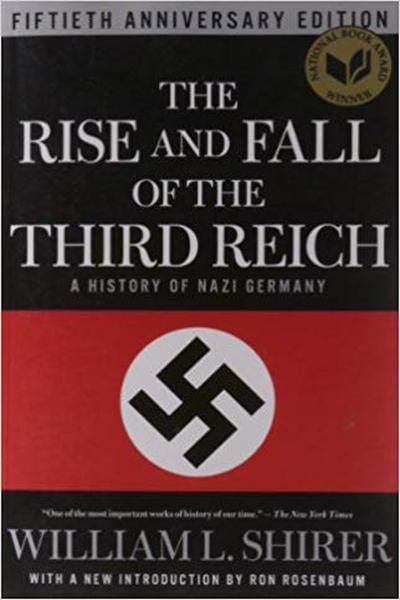
In "The Rise and Fall of the Third Reich," William L. Shirer delves into the tumultuous era of Nazi Germany, chronicling the meteoric ascent of Adolf Hitler and the catastrophic consequences of his totalitarian regime. With gripping detail, Shirer unveils the intricate web of political machinations, propaganda, and the chilling indifference of the populace that enabled the regime's rise. As the narrative unfolds, readers are drawn into the harrowing events of World War II, revealing the stark realities of war and oppression. Yet, the book also contemplates the broader implications of tyranny and the fragility of democracy in the face of political extremism. Will humanity learn from the lessons of the past, or are we doomed to repeat history?
By William L. Shirer
Published: 2011
"History is not a mere chronicle of events; it is the struggle of man against his own fallibility."

Start Listening to Book Summary
Book Review of The Rise and Fall of the Third Reich
National Book Award Winner: The definitive account of Nazi Germany and “one of the most important works of history of our time” (The New York Times). When the Third Reich fell, it fell swiftly. The Nazis had little time to destroy their memos, their letters, or their diaries. William L. Shirer’s sweeping account of the Third Reich uses these unique sources, combined with his experience living in Germany as an international correspondent throughout the war. The Rise and Fall of the Third Reich earned Shirer a National Book Award and continues to be recognized as one of the most important and authoritative books about the Third Reich and Nazi Germany ever written. The diaries of propaganda minister Joseph Goebbels, as well as evidence and other testimony gained at the Nuremberg Trials, could not have found more artful hands. Shirer gives a clear, detailed, and well-documented account of how it was that Adolf Hitler almost succeeded in conquering the world. With millions of copies in print, The Rise and Fall of the Third Reich is a chilling and illuminating portrait of mankind’s darkest hours. “A monumental work.” —Theodore H. White
Book Overview of The Rise and Fall of the Third Reich
About the Book Author
William L. Shirer
William L. Shirer was an American journalist and author best known for his pivotal works on World War II, particularly "The Rise and Fall of the Third Reich," which provides an in-depth analysis of Nazi Germany. Born on February 23, 1904, in Chicago, he began his career as a reporter in the 1920s, eventually moving to Europe where he covered the rise of Adolf Hitler and the events leading up to the war. Shirer's writing is celebrated for its comprehensive research and compelling narrative style, making complex historical events accessible to a wide audience. In addition to his historical works, he also authored "Berlin Diary," chronicling his experiences as a foreign correspondent in Germany during the rise of the Nazis. Shirer’s contributions to historical journalism have made him a significant figure in American literature and history, influencing generations of writers and historians.
Book Details
Key information about the book.
- Authors
- William L. Shirer
- Published
- October 2011
- Publisher
- RosettaBooks
- ISBN
- 079531700X
- Language
- English
- Pages
- 2093
- Genres
- HistoryWorld WarsPolitical HistoryPolitics and Current Affairs
Purchase Options
 Buy on Amazon
 Buy via BookShop
Support local bookstores: BookShop gives a portion of each sale to independent bookshops!
Similar books you might like →
The Lessons of History Book Summary
In "The Lessons of History," Will and Ariel Durant distill the sweeping narrative of human civilization into profound insights that span cultures and epochs. They explore the recurring themes of war, economics, religion, and human nature that shape our collective journey. With razor-sharp clarity, the Durants argue that the past holds invaluable lessons that can guide our present and future decisions. What patterns emerge when we closely examine the ebb and flow of societies? This thought-provoking work invites readers to reflect on the intricacies of humanity's story and consider how we might navigate the path ahead.

Voices of a People's History of the United States, 10th Anniversary Edition Book Summary
In 'Voices of a People's History of the United States,' Howard Zinn and Anthony Arnove present a powerful anthology that amplifies the voices often silenced in mainstream narratives. This 10th Anniversary Edition delves into the stories of marginalized communities, offering a profound insight into the struggles and triumphs of the American populace. Featuring riveting accounts from laborers, activists, and everyday citizens, the book challenges conventional historical perspectives. Each narrative serves as a reminder of the resilience of the human spirit and the continuous fight for justice. Discover the untold stories that shape the fabric of America and provoke thought about the narratives we accept.
The History of the Decline & Fall of the Roman Empire Book Summary
In 'The History of the Decline & Fall of the Roman Empire,' Edward Gibbon meticulously chronicles the mighty empire's descent into chaos and obscurity. With eloquent prose, Gibbon unveils the interplay of political intrigue, moral decay, and military defeats that eroded Rome's power. His analysis does not merely recount events but delves into the philosophical implications of decline and the lessons for future societies. As empires rise and fall, engage with the timeless questions Gibbon poses about civilization itself. Dive into this monumental work to understand how history shapes our present and future.

Bloodlands Book Summary
In 'Bloodlands', Timothy Snyder unveils the haunting history of the regions between Nazi Germany and Soviet Russia during World War II. The book meticulously explores the horrific atrocities committed by both regimes, resulting in the deaths of millions. Snyder's vivid narrative intertwines personal stories with broader historical contexts, painting a poignant picture of suffering and survival. As readers delve into this dark past, they are challenged to reflect on the consequences of totalitarianism and the fragility of human life. This compelling work not only educates but also provokes an urgent conversation about memory, history, and the moral responsibilities of the present.

Supermanifolds Book Summary
In 'Supermanifolds,' Bryce Seligman DeWitt unveils a radical framework that blends geometry and physics, exploring the mysterious realm where supermanifolds reside. These complex structures challenge conventional notions of space and time, offering insights into the fabric of the universe. As DeWitt deftly navigates the intricate connections between mathematics and theoretical physics, readers are invited to ponder profound questions about reality. With its groundbreaking ideas and unexpected revelations, the book promises to transform our understanding of the cosmos. Dive into this intellectual adventure and discover the hidden dimensions of existence!

A History of Economic Theory Book Summary
In 'A History of Economic Theory', Jürg Niehans takes readers on a captivating journey through the evolution of economic thought. From ancient philosophies to contemporary paradigms, the book unravels how ideas have shaped economic practices across cultures and eras. With each chapter, Niehans reveals the intellectual battles and breakthroughs that have defined the discipline. Rich in historical context, this work challenges readers to consider the relevance of past theories in today's economy. Dive into this scholarly adventure and discover how the past continually influences our understanding of wealth and value.

A Peace to End All Peace Book Summary
In 'A Peace to End All Peace', David Fromkin unravels the intricate web of events that led to the creation of the modern Middle East after World War I. With compelling narratives, Fromkin reveals how the decisions made by imperial powers set the stage for decades of conflict. This historical analysis not only highlights the reckless diplomacy of the time but also exposes the enduring consequences of these choices on today's geopolitical landscape. As tensions rise in the region, the book prompts readers to ponder: can any lasting peace ever truly emerge from such a fractured legacy? Dive into this thought-provoking exploration of history, power, and the quest for stability in a tumultuous world.
A History of God Book Summary
In 'A History of God', Karen Armstrong embarks on a fascinating journey through the evolution of the concept of God from ancient times to the modern era. She explores how various religions—Judaism, Christianity, and Islam—have shaped humanity's understanding of the divine, revealing the complexities and contradictions in these beliefs. Highlighting the influence of culture, politics, and philosophy, Armstrong invites readers to reconsider their perceptions of faith and spirituality. This thought-provoking narrative raises profound questions about the nature of belief and the future of religious thought. Are we on the brink of a new understanding of God, or are we simply repeating history?
Showing 8 of 30 similar books
Take your reading experience to the next level
Download our mobile app to enjoy your favorite books on the go. Get access to exclusive features, offline listening, and personalized recommendations.

Similar Book Recommendations →

Charlie Munger's Book Recommendations
Charlie Munger is an American investor, businessman, and philanthropist, best known as the vice chairman of Berkshire Hathaway, where he partners with Warren Buffett. Renowned for his insights on investment strategies and mental models, Munger has significantly influenced the world of finance. His notable literary contributions include "Poor Charlie's Almanack," a compilation of his speeches and writings that distill his wisdom on decision-making and business principles. Munger's work emphasizes the importance of multidisciplinary thinking and continuous learning. Beyond his financial acumen, he is celebrated for his charitable efforts, particularly in education and healthcare.

Ezra Klein's Book Recommendations
Ezra Klein is a prominent American journalist, political analyst, and author, renowned for his incisive commentary on politics and policy. He co-founded Vox, a widely respected news website known for its explanatory journalism, and served as its editor-in-chief. Klein's work includes the critically acclaimed book "Why We're Polarized," which delves into the deep-seated divisions in American politics. He also hosts "The Ezra Klein Show," a popular podcast where he interviews thought leaders from various fields. Klein's contributions have significantly shaped contemporary political discourse and media consumption.

Ben Shapiro's Book Recommendations
Ben Shapiro is an American conservative political commentator, author, and lawyer, known for his sharp analytical skills and outspoken views. He graduated from UCLA at the age of 20 and Harvard Law School at 23, demonstrating his early intellectual prowess. Shapiro is the author of several best-selling books including "Bullies: How the Left's Culture of Fear and Intimidation Silences Americans" and "The Right Side of History: How Reason and Moral Purpose Made the West Great." He is the co-founder and editor emeritus of The Daily Wire, a popular conservative news and opinion website. Through his writing and media presence, Shapiro has significantly influenced contemporary political discourse in the United States.

Jamie Foxx's Book Recommendations
Jamie Foxx is an American actor, comedian, and singer, known for his versatility across various forms of entertainment. He won an Academy Award for his portrayal of Ray Charles in the biopic Ray and has appeared in numerous films, including Django Unchained and Collateral. Foxx is also a successful musician, having released multiple albums and collaborated with top artists in the music industry. His ability to move between comedy, drama, and music has made him one of the most talented and respected performers in Hollywood. Beyond his entertainment career, Foxx is a philanthropist, supporting various causes related to health and education.

Brad Feld's Book Recommendations
Brad Feld is a prominent American entrepreneur, venture capitalist, and author known for his influential work in the startup ecosystem. Co-founder of the Foundry Group, he has played a pivotal role in funding and mentoring early-stage technology companies. Feld is also a key figure behind the Techstars accelerator program, which has helped launch numerous successful startups. As an author, he has penned several essential books on entrepreneurship and venture capital, including "Venture Deals" and "Startup Communities," which provide invaluable insights for aspiring entrepreneurs and investors. His writings and active blogging have cemented his reputation as a thought leader in the tech and startup communities.

Bill Gates's Book Recommendations
Bill Gates, co-founder of Microsoft Corporation, is a pioneering figure in the tech industry, having played a key role in the personal computer revolution. His work at Microsoft, particularly the development of Windows, transformed software and computing globally. Beyond his technology contributions, Gates is also a prolific author, with notable works such as "The Road Ahead" and "Business @ the Speed of Thought," which offer insights into the future of technology and business. Additionally, his philanthropic efforts through the Bill & Melinda Gates Foundation have had a profound impact on global health, education, and poverty. Gates continues to influence both technology and literature with his forward-thinking perspectives and innovative ideas.

John Fish's Book Recommendations
John Fish is a dynamic author and YouTuber known for his insightful explorations of productivity, education, and personal development. Gaining prominence through his engaging video content, Fish has also made significant contributions to literature with his thought-provoking essays and articles. He has been particularly influential among students and young professionals, offering practical advice on effective learning techniques and time management. His work often emphasizes the importance of curiosity and lifelong learning, resonating with a broad audience. In addition to his literary pursuits, Fish is recognized for his commitment to fostering a supportive and motivating online community.

Raoul Pal's Book Recommendations
Raoul Pal is a British economist, investment strategist, and co-founder of Real Vision, a financial media company that provides in-depth analysis of global markets and economies. Pal is known for his insights on macroeconomics, cryptocurrency, and investment trends, often sharing his expertise through interviews, reports, and documentaries. Before founding Real Vision, Pal worked at Goldman Sachs and managed a global macro hedge fund. He is a strong advocate for decentralized finance (DeFi) and frequently discusses the future of digital currencies and blockchain technology. His forward-thinking perspectives on finance have earned him a large following among investors and financial professionals.
Showing 8 of 11 related collections
“History is not a mere chronicle of events; it is the struggle of man against his own fallibility.”
The Rise and Fall of the Third Reich
By William L. Shirer
Frequently Asked Questions
Explore Our Catalogue
Discover a world of knowledge through our extensive collection of book summaries.
Genres
Genres
Genres
Featured Collections
- Top Book Club Picks
- One-Stop Nutrition
- Summer Reads 2024
- Best Beach Reads 2024
- Work-Life Balance Guide
- Time Management
- Healthy Foods
- Entrepreneur Toolkit
- Mind & Body Wellness
- Future Tech Insights
- Leadership Essentials
- Financial Freedom
- Sci-Fi Masterpieces
- Parenting 101
- Books That Became Blockbusters
- Guide to a Healthy Pregnancy