The Secret of Our Success Book Summary
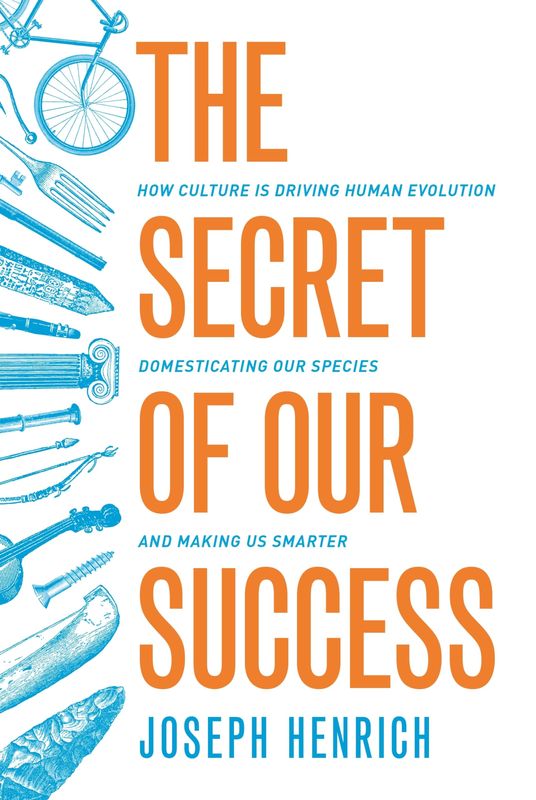
In 'The Secret of Our Success', Joseph Henrich unveils the surprising power of culture in shaping human evolution and success. He argues that our ability to learn from others has driven advancements beyond mere genetics. Through captivating examples from history and diverse societies, Henrich demonstrates how shared knowledge and collective behavior fueled our transformation. As we explore the intricate web of cultural influences, readers will be left pondering: what truly defines human achievement? This thought-provoking investigation challenges conventional wisdom and invites us to rethink the role of culture in our lives.
By Joseph Henrich
Published: 2017
"Our greatest achievements are not born from individual brilliance, but from the shared knowledge and collective innovations of our communities."

Start Listening to Book Summary
Book Review of The Secret of Our Success
How our collective intelligence has helped us to evolve and prosper Humans are a puzzling species. On the one hand, we struggle to survive on our own in the wild, often failing to overcome even basic challenges, like obtaining food, building shelters, or avoiding predators. On the other hand, human groups have produced ingenious technologies, sophisticated languages, and complex institutions that have permitted us to successfully expand into a vast range of diverse environments. What has enabled us to dominate the globe, more than any other species, while remaining virtually helpless as lone individuals? This book shows that the secret of our success lies not in our innate intelligence, but in our collective brains—on the ability of human groups to socially interconnect and learn from one another over generations. Drawing insights from lost European explorers, clever chimpanzees, mobile hunter-gatherers, neuroscientific findings, ancient bones, and the human genome, Joseph Henrich demonstrates how our collective brains have propelled our species' genetic evolution and shaped our biology. Our early capacities for learning from others produced many cultural innovations, such as fire, cooking, water containers, plant knowledge, and projectile weapons, which in turn drove the expansion of our brains and altered our physiology, anatomy, and psychology in crucial ways. Later on, some collective brains generated and recombined powerful concepts, such as the lever, wheel, screw, and writing, while also creating the institutions that continue to alter our motivations and perceptions. Henrich shows how our genetics and biology are inextricably interwoven with cultural evolution, and how culture-gene interactions launched our species on an extraordinary evolutionary trajectory. Tracking clues from our ancient past to the present, The Secret of Our Success explores how the evolution of both our cultural and social natures produce a collective intelligence that explains both our species' immense success and the origins of human uniqueness.
Book Overview of The Secret of Our Success
About the Book Author
Joseph Henrich
Joseph Henrich is a distinguished cultural evolutionary scientist and professor at Harvard University, specializing in the intersection of psychology, anthropology, and economics. Renowned for his insights into human cooperation, cultural evolution, and social behavior, Henrich is the author of several influential works, including "The Secret of Our Success: How Culture is Driving Human Evolution, Domesticating Our Species, and Making Us Smarter" and "We Don’t Think and We Know: The Cultural Evolution of Thought." His writing is characterized by a blend of empirical research and accessible narrative, making complex ideas in evolutionary biology and social science engaging to a broad audience.
Book Details
Key information about the book.
- Authors
- Joseph Henrich
- Published
- October 2017
- Publisher
- Princeton University Press
- ISBN
- 0691178437
- Language
- English
- Pages
- 464
- Genres
- PhilosophyHistorySocial CommentaryCultural History
Purchase Options
 Buy on Amazon
 Buy via BookShop
Support local bookstores: BookShop gives a portion of each sale to independent bookshops!
Similar books you might like →
Sapiens Book Summary
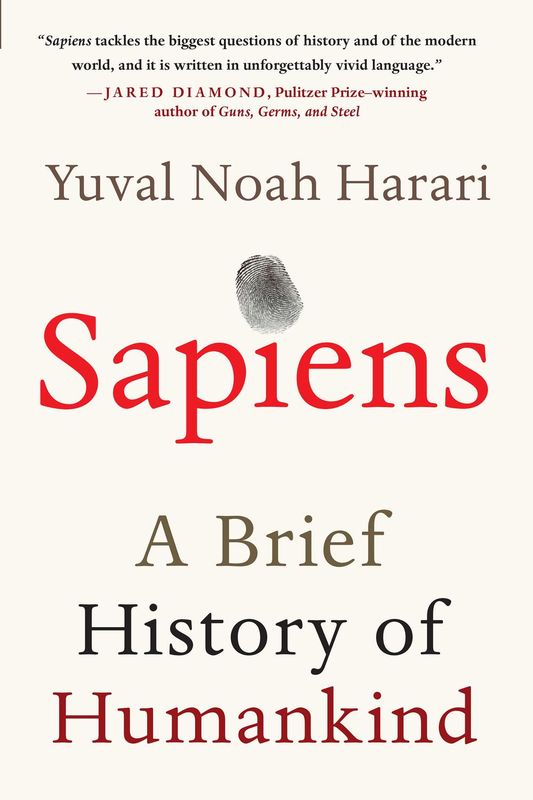
In "Sapiens: A Brief History of Humankind," Yuval Noah Harari takes readers on an exhilarating journey through the evolution of our species, from the dawn of Homo sapiens to the complexities of the modern world. He explores pivotal moments like the Cognitive Revolution that sparked human imagination, the Agricultural Revolution that reshaped societies, and the Scientific Revolution that propelled unprecedented advances. As Harari delves into the interplay of biology, culture, and history, he challenges our understanding of what it means to be human. This thought-provoking narrative raises crucial questions about our future in an age dominated by technology and artificial intelligence. Prepare to rethink humanity’s past and speculate about its fate—are we the architects of our destiny?
The Lessons of History Book Summary
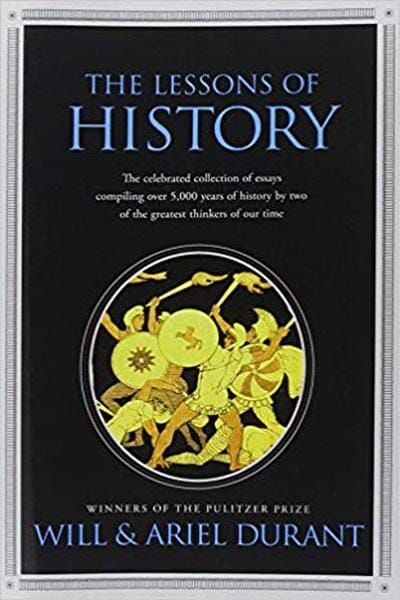
In "The Lessons of History," Will and Ariel Durant distill the sweeping narrative of human civilization into profound insights that span cultures and epochs. They explore the recurring themes of war, economics, religion, and human nature that shape our collective journey. With razor-sharp clarity, the Durants argue that the past holds invaluable lessons that can guide our present and future decisions. What patterns emerge when we closely examine the ebb and flow of societies? This thought-provoking work invites readers to reflect on the intricacies of humanity's story and consider how we might navigate the path ahead.

The Poetic Edda Book Summary
'The Poetic Edda' by Jackson Crawford offers a stunning gateway into the mythology and poetry of ancient Norse culture. This acclaimed translation brings to life the tales of gods, heroes, and the creation of the world with vivid clarity and depth. Readers will encounter iconic characters like Odin and Thor as they navigate themes of fate, honor, and the eternal struggle between chaos and order. Crawford’s expert commentary adds context and scholarship, making it accessible for both newcomers and seasoned enthusiasts of Norse lore. Dive into this captivating collection and uncover the timeless wisdom that still resonates today.

Messy Book Summary
In 'Messy', Tim Harford unveils the hidden power of chaos and disorder in our lives. Rather than striving for perfect organization, he argues that embracing messiness can lead to creativity and innovation. Through captivating anecdotes and research, he demonstrates how a little disorder can foster resilience and adaptability. Harford’s insights challenge conventional wisdom, making readers rethink their approach to work and life. Discover why sometimes a little mess might be exactly what you need to thrive!

A History of Economic Theory Book Summary
In 'A History of Economic Theory', Jürg Niehans takes readers on a captivating journey through the evolution of economic thought. From ancient philosophies to contemporary paradigms, the book unravels how ideas have shaped economic practices across cultures and eras. With each chapter, Niehans reveals the intellectual battles and breakthroughs that have defined the discipline. Rich in historical context, this work challenges readers to consider the relevance of past theories in today's economy. Dive into this scholarly adventure and discover how the past continually influences our understanding of wealth and value.

1421: The Year China Discovered The World Book Summary
In '1421: The Year China Discovered The World,' Gavin Menzies presents a groundbreaking theory that suggests the Ming Dynasty launched a massive naval expedition that circumnavigated the globe long before Columbus. The narrative intertwines maritime exploration, historical intrigue, and compelling shipbuilding technologies, revealing a hidden chapter of world history. Menzies argues that these voyages led to encounters with distant lands, including America and Australia, fundamentally changing global trade and interaction. His thrilling investigation challenges long-held beliefs and ignites debate among historians about the true timeline of exploration. Are we ready to rethink the story of our past?
A History of God Book Summary
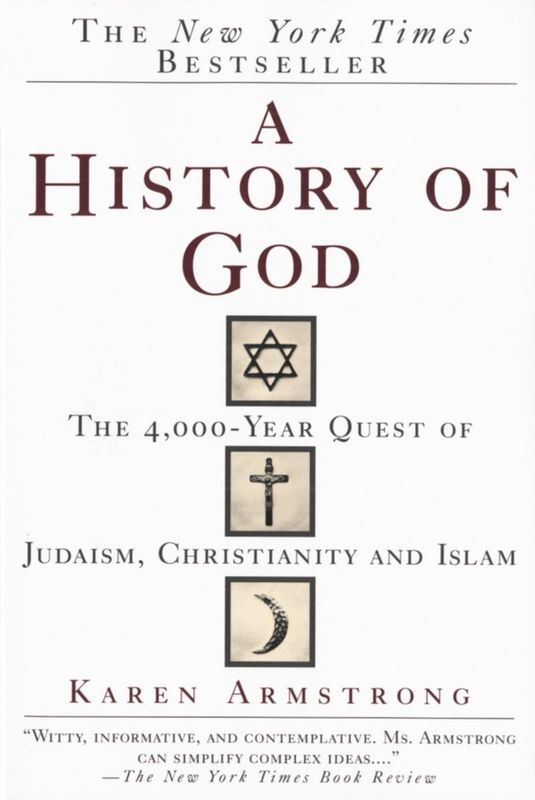
In 'A History of God', Karen Armstrong embarks on a fascinating journey through the evolution of the concept of God from ancient times to the modern era. She explores how various religions—Judaism, Christianity, and Islam—have shaped humanity's understanding of the divine, revealing the complexities and contradictions in these beliefs. Highlighting the influence of culture, politics, and philosophy, Armstrong invites readers to reconsider their perceptions of faith and spirituality. This thought-provoking narrative raises profound questions about the nature of belief and the future of religious thought. Are we on the brink of a new understanding of God, or are we simply repeating history?

A Brief History of Everything (20th Anniversary Edition) Book Summary
In 'A Brief History of Everything', Ken Wilber takes readers on an enlightening journey through the evolution of consciousness and the unfolding of human history. He skillfully weaves together insights from philosophy, science, and spirituality, offering a holistic perspective on our existence. Discover how various cultural paradigms intersect and influence our understanding of reality. This thought-provoking exploration challenges conventional views and invites readers to contemplate their place in the cosmos. What if the key to our future lies in understanding the past in a radically new way?
Showing 8 of 19 similar books
Take your reading experience to the next level
Download our mobile app to enjoy your favorite books on the go. Get access to exclusive features, offline listening, and personalized recommendations.


“Our greatest achievements are not born from individual brilliance, but from the shared knowledge and collective innovations of our communities.”
The Secret of Our Success
By Joseph Henrich
Frequently Asked Questions
Explore Our Catalogue
Discover a world of knowledge through our extensive collection of book summaries.
Genres
Genres
Genres
Featured Collections
- Top Book Club Picks
- One-Stop Nutrition
- Summer Reads 2024
- Best Beach Reads 2024
- Work-Life Balance Guide
- Time Management
- Healthy Foods
- Entrepreneur Toolkit
- Mind & Body Wellness
- Future Tech Insights
- Leadership Essentials
- Financial Freedom
- Sci-Fi Masterpieces
- Parenting 101
- Books That Became Blockbusters
- Guide to a Healthy Pregnancy