Magicians of the Gods Book Summary
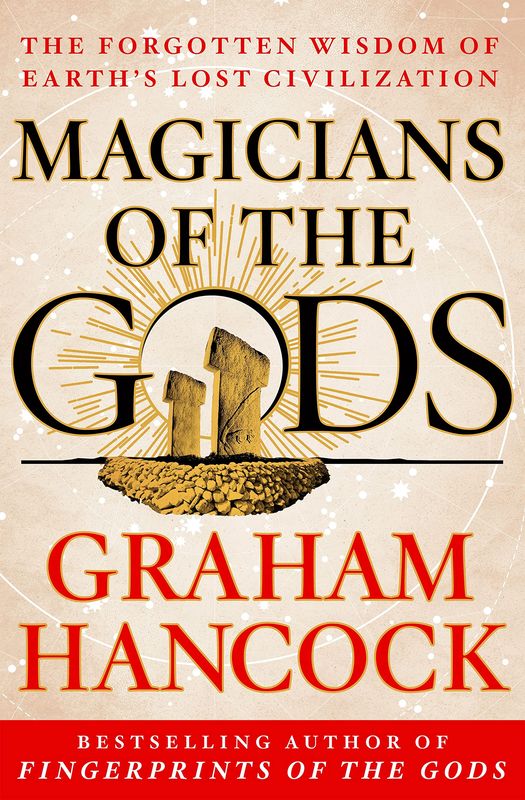
In 'Magicians of the Gods,' Graham Hancock unveils a breathtaking exploration of ancient civilizations and their lost knowledge. Delving deep into archaeological mysteries, he challenges the conventional narratives of history, suggesting that advanced cultures existed long before recorded time. Hancock presents compelling evidence that our ancestors possessed a sophisticated understanding of cosmic forces and earth's secrets. Through captivating storytelling, he ardently argues that a global catastrophe may have wiped out these civilizations, sending humanity back to the Stone Age. This provocative journey invites readers to reconsider the foundations of our past and the tantalizing possibility of forgotten wisdom.
By Graham Hancock
Published: 2015
"The past is a living force that shapes our present and future; we must uncover the truths hidden beneath the sands of time to understand our place in the cosmos."

Start Listening to Book Summary
Book Review of Magicians of the Gods
"The evidence revealed in this book shows beyond reasonable doubt that an advanced civilization that flourished during the Ice Age was destroyed in the global cataclysms between 12,800 and 11,600 years ago. But there were survivors - known to later cultures by names such as 'the Sages', 'the Magicians', 'the Shining Ones', and 'the Mystery Teachers of Heaven'. They travelled the world in their great ships doing all in their power to keep the spark of civilization burning. They settled at key locations - Gobekli Tepe in Turkey, Baalbek in the Lebanon, Giza in Egypt, ancient Sumer, Mexico, Peru and across the Pacific where a huge pyramid has recently been discovered in Indonesia. Everywhere they went these 'Magicians of the Gods' brought with them the memory of a time when mankind had fallen out of harmony with the universe and paid a heavy price. A memory and a warning to the future..."--Provided by publisher.
Book Overview of Magicians of the Gods
About the Book Author
Graham Hancock
Graham Hancock is a British author and journalist known for his unconventional theories about historical events and ancient civilizations. He gained widespread recognition with his best-selling book 'Fingerprints of the Gods,' which posits that a highly advanced civilization existed thousands of years ago and was lost to cataclysmic events. Hancock's other notable works include 'Magicians of the Gods,' 'The Sign and the Seal,' and 'America Before.' His writing style is engaging and accessible, often blending archaeological research with speculative theories that encourage readers to rethink conventional historical narratives. Hancock's work has sparked much debate, making him a provocative figure in the field of historical literature.
Book Details
Key information about the book.
- Authors
- Graham Hancock
- Published
- November 2015
- Publisher
- Macmillan
- ISBN
- 1250045924
- Language
- English
- Pages
- 526
- Genres
- Ancient HistoryHistoryCultural HistoryHistory of Science
Purchase Options
 Buy on Amazon
 Buy via BookShop
Support local bookstores: BookShop gives a portion of each sale to independent bookshops!
Similar books you might like →
Sapiens Book Summary
In "Sapiens: A Brief History of Humankind," Yuval Noah Harari takes readers on an exhilarating journey through the evolution of our species, from the dawn of Homo sapiens to the complexities of the modern world. He explores pivotal moments like the Cognitive Revolution that sparked human imagination, the Agricultural Revolution that reshaped societies, and the Scientific Revolution that propelled unprecedented advances. As Harari delves into the interplay of biology, culture, and history, he challenges our understanding of what it means to be human. This thought-provoking narrative raises crucial questions about our future in an age dominated by technology and artificial intelligence. Prepare to rethink humanity’s past and speculate about its fate—are we the architects of our destiny?

The Innovator's Dilemma Book Summary
In "The Innovator's Dilemma," Clayton Christensen unveils the paradox that drives successful companies to failure: their own success. He reveals how disruptive innovations, initially dismissed as inferior, can upend industry giants if they fail to adapt. With compelling case studies, Christensen illustrates why even the most formidable businesses can be blind to emerging threats. This thought-provoking exploration challenges leaders to rethink their strategies and embrace radical change. Are you ready to discover the hidden forces that could make or break your industry?
A Brief History of Time Book Summary
In "A Brief History of Time," Stephen Hawking takes readers on a captivating journey through the cosmos, exploring the nature of time, black holes, and the universe's beginnings. With stunning clarity, he unravels complex scientific concepts, inviting everyone—from curious laypersons to seasoned physicists—to ponder the mysteries of existence. Hawking's charismatic storytelling challenges our perceptions of reality and time itself, posing profound questions about the universe's fate. As he merges science with philosophy, the reader is compelled to reflect on their place in a vast, enigmatic cosmos. Prepare to be inspired and awed by a narrative that transcends mere facts, pushing the boundaries of human understanding.

Guns, Germs, and Steel Book Summary
In 'Guns, Germs, and Steel,' Jared Diamond investigates the factors that have shaped human societies over the last 13,000 years. He argues that environmental differences, rather than racial genetics, have been the primary drivers of inequality among civilizations. The book explores how agriculture, technology, and disease have influenced the rise and fall of empires. Through compelling narratives and insightful analysis, Diamond uncovers the unexpected connections between geography and history. Readers are left questioning the very foundations of societal development and the future of humanity.

Collateral Damage Book Summary
In 'Collateral Damage,' Cynthia Peters explores a gripping tale of survival and resilience in the face of unforeseen disaster. The protagonist, a skilled crisis negotiator, finds herself entangled in a high-stakes situation when a routine mission escalates into chaos. As secrets unravel and alliances shift, she must confront her own past while navigating a web of deception and danger. With unwavering determination, she fights not only for her life but also for the future of those she loves. This gripping narrative blurs the lines between heroism and vulnerability, leaving readers questioning the true cost of survival.

The Magus Book Summary
Set against the backdrop of a sun-soaked Greek island, 'The Magus' follows Nicholas Urfe, a disillusioned Englishman seeking purpose in life. His mundane existence is disrupted when he encounters the enigmatic Maurice Conchis, who introduces him to a world of psychological manipulation and mind games. As Nicholas becomes entangled in Conchis's strange and elaborate schemes, he grapples with his own identity and desires. The novel weaves themes of illusion, reality, and existentialism, leading to a shocking climax that challenges everything he thought he knew. Will Nicholas uncover the truth, or will he remain trapped in the seductive web of the Magus?
The City in History Book Summary
In 'The City in History,' Lewis Mumford explores the evolution of urban life from ancient times to the modern metropolis. He argues that cities are not just physical structures but reflections of human values and societal progress. Mumford delves into the interplay between architecture, technology, and culture, revealing how they shape the human experience. With incisive critiques and vivid historical examples, he presents a vision of the ideal city that promotes both individuality and community. This thought-provoking journey challenges readers to reconsider the role of cities in their own lives and the future of civilization.
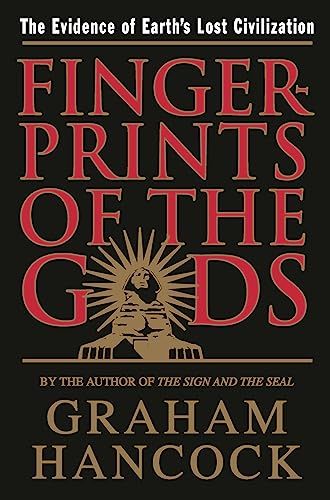
Fingerprints of the Gods Book Summary
In 'Fingerprints of the Gods', Graham Hancock embarks on a captivating journey to uncover humanity's forgotten past. He explores ancient civilizations and enigmatic archaeological discoveries that challenge conventional history. With the theory of a lost advanced civilization, Hancock weaves together evidence from myths, geology, and astronomy. Each page reveals shocking revelations that provoke questions about our origins and the cyclical nature of civilization. Prepare to rethink everything you thought you knew about human history!
Showing 8 of 26 similar books
Take your reading experience to the next level
Download our mobile app to enjoy your favorite books on the go. Get access to exclusive features, offline listening, and personalized recommendations.

Similar Book Recommendations →

Chris Dixon's Book Recommendations
Chris Dixon is a notable venture capitalist and technology entrepreneur, best known for his influential role as a general partner at Andreessen Horowitz, where he leads investments in cryptocurrency and blockchain technology. Before joining the firm, Dixon co-founded two startups: SiteAdvisor, a web security company acquired by McAfee, and Hunch, a recommendation engine acquired by eBay. In addition to his investment career, Dixon is a prolific writer and thought leader on technology and innovation, contributing insightful essays and articles to various platforms such as his personal blog and Medium. His writings often explore the future of technology, the internet, and the impact of blockchain, making significant contributions to contemporary tech literature. Dixon's work has earned him recognition as a visionary in both the tech and literary worlds.

Joe Rogan's Book Recommendations
Joe Rogan is a multifaceted American entertainer known primarily for his work as a comedian, podcast host, and commentator. He gained widespread recognition through his immensely popular podcast, "The Joe Rogan Experience," which has featured in-depth conversations with a diverse array of guests, including scientists, celebrities, and politicians. Though not primarily known for literature, Rogan has contributed to the field with his thought-provoking discussions that often explore philosophical and intellectual ideas. Additionally, he has authored the book "Mastering the Rubber Guard," which delves into Brazilian Jiu-Jitsu techniques, showcasing his expertise in martial arts. Rogan's influence extends beyond traditional media, impacting contemporary discourse through his unique blend of humor, curiosity, and critical thinking.

Charlie Munger's Book Recommendations
Charlie Munger is an American investor, businessman, and philanthropist, best known as the vice chairman of Berkshire Hathaway, where he partners with Warren Buffett. Renowned for his insights on investment strategies and mental models, Munger has significantly influenced the world of finance. His notable literary contributions include "Poor Charlie's Almanack," a compilation of his speeches and writings that distill his wisdom on decision-making and business principles. Munger's work emphasizes the importance of multidisciplinary thinking and continuous learning. Beyond his financial acumen, he is celebrated for his charitable efforts, particularly in education and healthcare.

Nassim Nicholas Taleb's Book Recommendations
Nassim Nicholas Taleb is a Lebanese-American author, scholar, and risk analyst, best known for his work on uncertainty, probability, and risk. His books, including The Black Swan and Antifragile, explore how rare and unpredictable events shape the world and how individuals and systems can become more resilient to shocks. Taleb’s insights on risk management have influenced fields ranging from finance to medicine, and he is known for his outspoken criticism of conventional wisdom. His ideas about randomness, decision-making, and the limitations of human knowledge have made him a leading thinker in modern economics and philosophy.

Jamie Dimon's Book Recommendations
Jamie Dimon is an American business executive, best known as the Chairman and CEO of JPMorgan Chase, one of the largest and most influential financial institutions in the world. Dimon has led JPMorgan through multiple economic crises, including the 2008 financial crash, and has consistently been recognized for his leadership in the banking industry. Under his tenure, JPMorgan has grown into a global financial powerhouse, focusing on innovation and sustainability. Dimon is also an advocate for corporate responsibility and frequently speaks on economic and regulatory issues. His leadership style and strategic insights have earned him widespread respect in the business world.

Daniel Ek's Book Recommendations
Daniel Ek is a Swedish entrepreneur and co-founder of Spotify, the world’s leading music streaming platform. Ek revolutionized the music industry by offering a legal, user-friendly alternative to piracy, and Spotify has since become the dominant player in the streaming market. Under his leadership, Spotify has expanded globally, offering access to millions of songs and podcasts while reshaping how artists distribute their work. Ek is known for his forward-thinking approach to technology and his commitment to evolving Spotify’s platform for both users and creators. He continues to lead Spotify as it explores new innovations in audio entertainment.

Aaron Rodgers's Book Recommendations
Aaron Rodgers is a renowned American football quarterback, widely recognized for his exceptional career with the Green Bay Packers in the NFL. Although his primary acclaim comes from sports, Rodgers has contributed to literature through insightful writings and interviews that offer a deep dive into the mindset of a professional athlete. His thoughtful perspectives on leadership, teamwork, and personal growth have resonated with readers beyond the sports community. Rodgers’ contributions have been featured in various sports and lifestyle publications, adding a unique voice to the literary world. His ability to articulate the nuances of his experiences has made him a respected figure in both athletic and literary circles.

Mark Manson's Book Recommendations
Mark Manson is a best-selling author and personal development expert known for his candid and no-nonsense approach to self-help. His most notable work, "The Subtle Art of Not Giving a F*ck," has sold millions of copies worldwide and has been translated into numerous languages, resonating with readers for its practical advice and irreverent tone. Manson followed up with another successful book, "Everything Is F*cked: A Book About Hope," which further cemented his reputation as a thought leader in modern existentialism. In addition to his books, he runs a popular blog that delves into topics ranging from happiness to personal growth. His work has not only transformed the self-help genre but also influenced a global audience seeking authentic and actionable guidance.
Showing 8 of 14 related collections
“The past is a living force that shapes our present and future; we must uncover the truths hidden beneath the sands of time to understand our place in the cosmos.”
Magicians of the Gods
By Graham Hancock
Frequently Asked Questions
Explore Our Catalogue
Discover a world of knowledge through our extensive collection of book summaries.
Genres
Genres
Genres
Featured Collections
- Top Book Club Picks
- One-Stop Nutrition
- Summer Reads 2024
- Best Beach Reads 2024
- Work-Life Balance Guide
- Time Management
- Healthy Foods
- Entrepreneur Toolkit
- Mind & Body Wellness
- Future Tech Insights
- Leadership Essentials
- Financial Freedom
- Sci-Fi Masterpieces
- Parenting 101
- Books That Became Blockbusters
- Guide to a Healthy Pregnancy