The Inevitable Book Summary
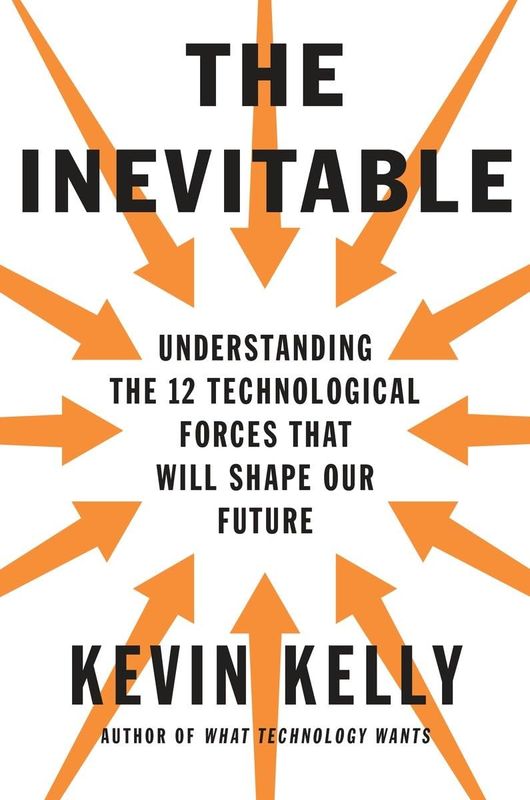
In 'The Inevitable', Kevin Kelly explores the twelve technological forces that will shape our future over the next thirty years. Each trend, from artificial intelligence to virtual reality, offers a glimpse into how our lives will be transformed in ways we can't yet imagine. Kelly combines insightful analysis with compelling anecdotes to illustrate the impact of these changes on society, work, and relationships. Through a lens of optimism, he urges readers to embrace the inevitable technological evolution instead of resisting it. This thought-provoking read invites curiosity about what the future holds and challenges us to adapt proactively.
By Kevin Kelly
Published: 2016
""The future is already here – it's just not very evenly distributed.""

Start Listening to Book Summary
Book Review of The Inevitable
Becoming -- Cognifying -- Flowing -- Screening -- Accessing -- Sharing -- Filtering -- Remixing -- Interacting -- Tracking -- Questioning -- Beginning
Book Overview of The Inevitable
About the Book Author
Kevin Kelly
Kevin Kelly is a renowned author, speaker, and futurist, best known for his influential books on technology and society, including 'What Technology Wants', 'The Inevitable', and 'Cool Tools'. As the founding executive editor of Wired magazine, he has been at the forefront of documenting the digital age and its implications for humanity. Kelly's writing style combines insightful analysis with engaging storytelling, exploring the intersection of technology and culture. His work often reflects a curiosity about the future and a belief in the empowering potential of technology.
Book Details
Key information about the book.
- Authors
- Kevin Kelly
- Published
- January 2016
- Publisher
- Penguin
- ISBN
- 0525428089
- Language
- English
- Pages
- 338
- Genres
- Artificial IntelligenceTechnologyEmerging Technologies
Purchase Options
 Buy on Amazon
 Buy via BookShop
Support local bookstores: BookShop gives a portion of each sale to independent bookshops!
Similar books you might like →
The Singularity Is Near Book Summary
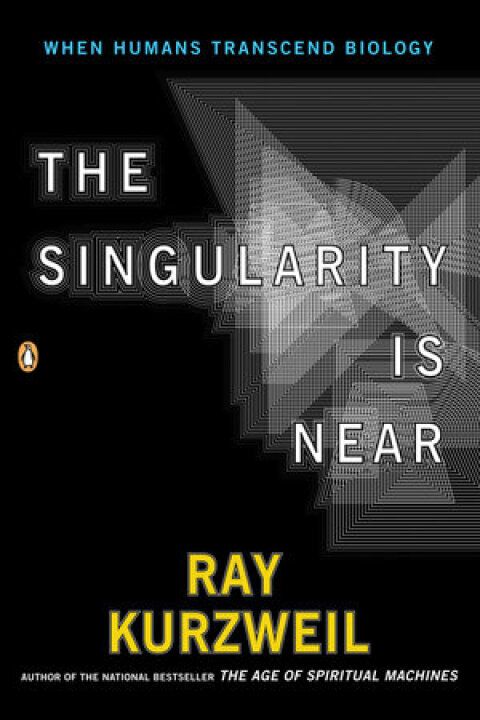
In "The Singularity Is Near," futurist Ray Kurzweil examines the transformative convergence of technology and biology, predicting a pivotal moment when artificial intelligence surpasses human intelligence. He explores the implications of exponentially accelerating advancements, from nanotechnology to genetic engineering, and their potential to reshape humanity. As Kurzweil articulates the challenges and opportunities posed by this evolution, he paints a provocative picture of a future where humans and machines merge. Could we soon transcend our biological limitations? Venture into this thought-provoking narrative that questions the very essence of what it means to be human amidst the rise of the machines.
Homo Deus Book Summary
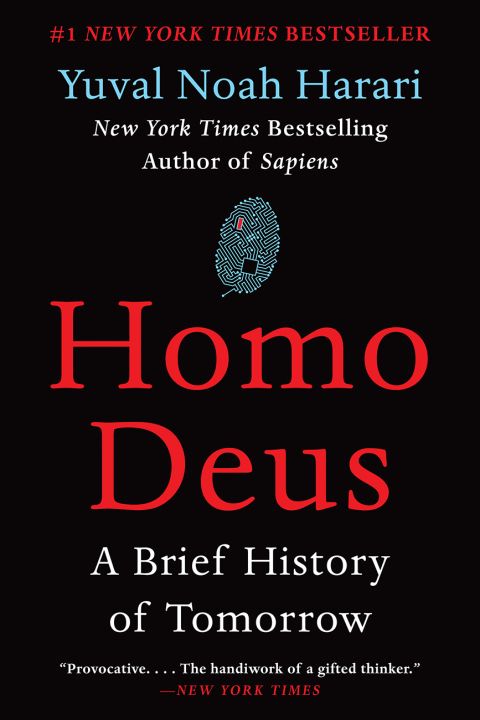
In "Homo Deus: A Brief History of Tomorrow," Yuval Noah Harari explores the future possibilities for humanity as we evolve beyond our current limitations. Delving into themes of artificial intelligence, genetic engineering, and the quest for immortality, he provokes thought about what may come after Homo sapiens. As society increasingly turns to technology for solutions, he questions the implications of our pursuit of happiness and god-like powers. Will we augment our bodies and minds, or lose our humanity in the process? This provocative journey invites readers to ponder the exhilarating—and terrifying—potential of our own evolution.
Makers Book Summary
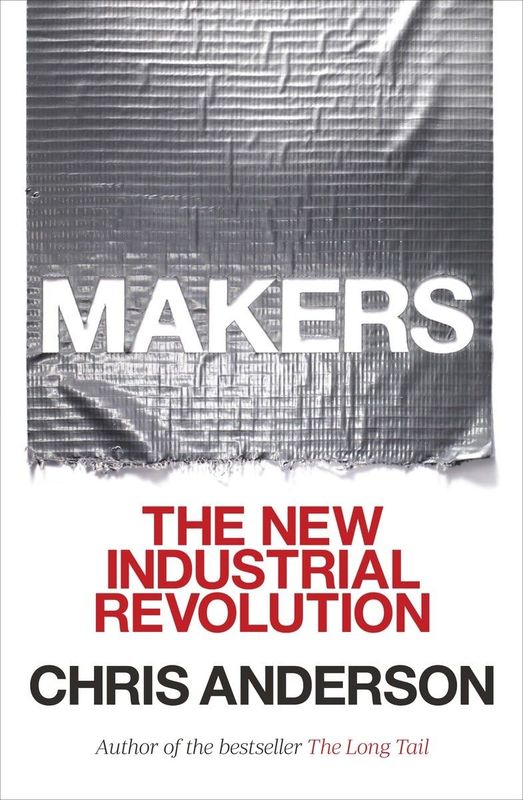
In 'Makers,' Chris Anderson explores the revolutionary movement of DIY innovation that is reshaping our economy and culture. He introduces the rise of 3D printing, robotics, and open-source technologies that empower everyday creators to become entrepreneurs. The book reveals how this grassroots revolution is set to democratize manufacturing and inspire a new era of creativity and invention. Anderson highlights fascinating stories of makers who are transforming their ideas into tangible products, mingling technology with artistry. Dive into a world where possibilities are limited only by imagination!
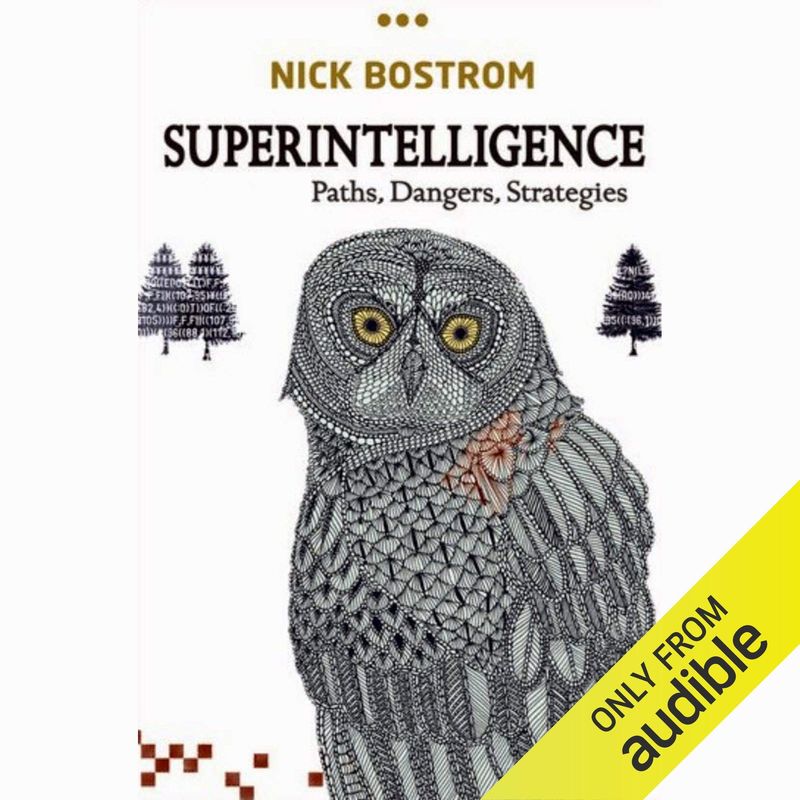
Superintelligence Book Summary
In 'Superintelligence', Nick Bostrom explores the future of artificial intelligence and its potential to surpass human intelligence. He delves into the profound implications this could have for humanity's survival and progress. With a blend of philosophical inquiry and rigorous analysis, Bostrom warns of the unforeseen risks associated with creating superintelligent machines. His thought-provoking arguments challenge readers to consider the ethical responsibilities that come with technological advancement. Will we be the masters of our own creations or their unwitting victims?
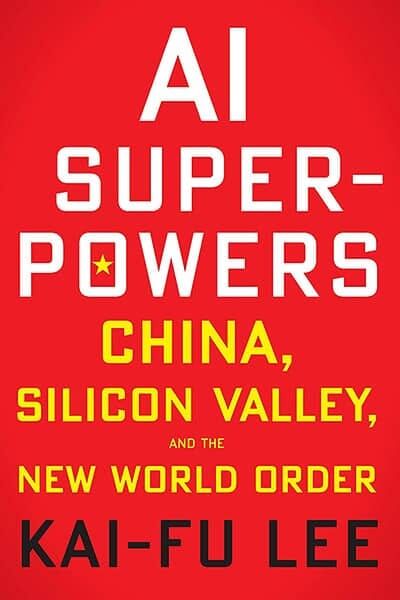
AI Superpowers Book Summary
In 'AI Superpowers', Kai-Fu Lee explores the breathtaking rise of artificial intelligence and its transformative impact on the global economy. He compares the leading AI developments in the United States and China, revealing a fierce competition that reshapes the future. Lee draws on his extensive experience in the tech industry to discuss the ethical implications and the potential for job displacement. As he presents a compelling vision of a world where AI can augment human capabilities, he challenges us to rethink our roles in an AI-driven era. With a blend of optimism and caution, this book is a must-read for anyone looking to understand the next technological revolution.
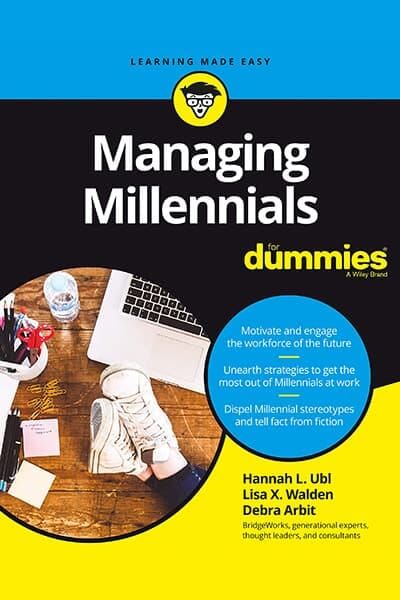
Managing Millennials For Dummies Book Summary
Discover the essential strategies for effectively leading and engaging the dynamic Millennial workforce in 'Managing Millennials For Dummies.' This insightful guide dives into the unique characteristics and motivations that drive Millennials, equipping managers with practical tools to foster collaboration and productivity. Uncover the secrets to building a thriving workplace culture that resonates with this generation while navigating the challenges they present. With real-world examples and actionable tips, you'll learn how to bridge generational gaps and harness the full potential of diverse teams. Dive in and transform your approach to management, ensuring that you not only survive but thrive in the evolving business landscape!
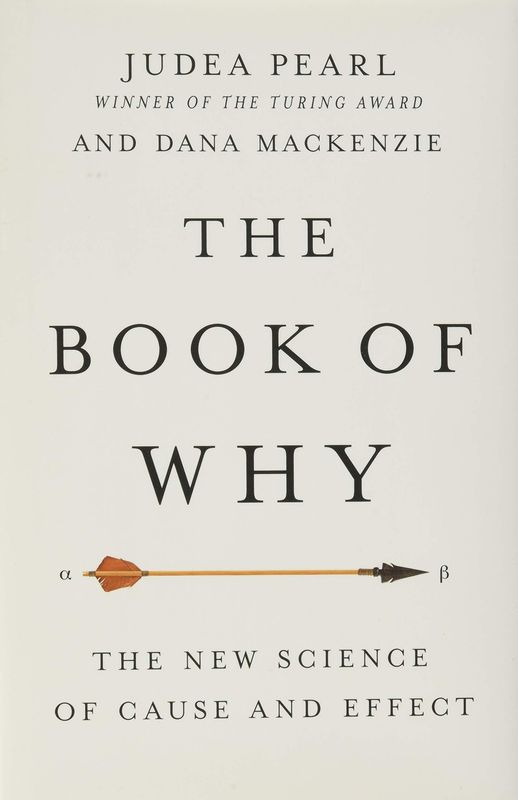
The Book of Why Book Summary
In 'The Book of Why', Judea Pearl and Dana Mackenzie unveil the profound concepts of causality and its pivotal role in understanding the world around us. They challenge traditional statistical methods, introducing the causal revolution that will change how we interpret data. Through captivating anecdotes and accessible explanations, the authors reveal the tools necessary to discern cause from correlation. Readers will be drawn into the mystery of why things happen, unfolding layers of knowledge that provoke deeper inquiry. This book is not just about statistics; it's a pathway to mastering the art of reasoning itself.
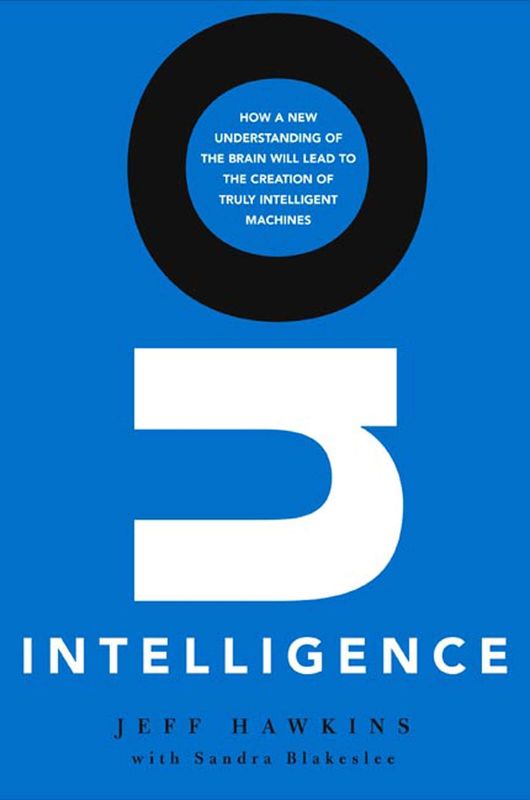
On Intelligence Book Summary
In 'On Intelligence,' Jeff Hawkins proposes a revolutionary theory of how the brain processes information, challenging traditional notions of intelligence. With a blend of neuroscience and cognitive science, Hawkins introduces the concept of the memory-prediction framework, suggesting that intelligence arises from our ability to predict future events based on past experiences. He argues that understanding this mechanism is key to replicating human-like intelligence in machines. The book is filled with intriguing insights and thought-provoking ideas, making readers reconsider what it truly means to be intelligent. A must-read for anyone curious about the intersections of brain function, consciousness, and artificial intelligence.
Showing 8 of 28 similar books
Take your reading experience to the next level
Download our mobile app to enjoy your favorite books on the go. Get access to exclusive features, offline listening, and personalized recommendations.

Similar Book Recommendations →

Lex Fridman's Book Recommendations
Lex Fridman is an artificial intelligence researcher, podcaster, and MIT professor, known for his work in autonomous vehicles, robotics, and deep learning. Fridman has gained widespread popularity through his podcast, Lex Fridman Podcast, where he interviews leading thinkers in science, technology, and philosophy, exploring topics like AI, consciousness, and the future of humanity. His academic work focuses on human-centered AI, aiming to create machines that can better understand and interact with humans. Fridman’s ability to distill complex topics into accessible conversations has earned him a large following, and his podcast is known for its thoughtful, in-depth discussions with some of the brightest minds of our time. He is also an advocate for the responsible development of AI, emphasizing the ethical implications of this rapidly advancing technology. Outside of academia and podcasting, Fridman is a practitioner of jiu-jitsu and frequently speaks about the importance of discipline and continuous learning.
Naval Ravikant's Book Recommendations
Naval Ravikant is an entrepreneur, angel investor, and philosopher, best known as the co-founder of AngelList, a platform that connects startups with investors. Ravikant is a prolific thinker and writer on topics such as startups, investing, and personal well-being, sharing his wisdom through essays, podcasts, and social media. He has invested in over 100 companies, including Uber, Twitter, and Yammer, making him one of Silicon Valley’s most successful angel investors. Ravikant is also known for his philosophical musings on wealth, happiness, and the meaning of life, which have garnered him a large and dedicated following.

Charlie Munger's Book Recommendations
Charlie Munger is an American investor, businessman, and philanthropist, best known as the vice chairman of Berkshire Hathaway, where he partners with Warren Buffett. Renowned for his insights on investment strategies and mental models, Munger has significantly influenced the world of finance. His notable literary contributions include "Poor Charlie's Almanack," a compilation of his speeches and writings that distill his wisdom on decision-making and business principles. Munger's work emphasizes the importance of multidisciplinary thinking and continuous learning. Beyond his financial acumen, he is celebrated for his charitable efforts, particularly in education and healthcare.

Alexey Moiseenkov's Book Recommendations
Alexey Moiseenkov is a Russian entrepreneur and tech innovator best known for creating Prisma, the groundbreaking mobile app that transforms photos into artworks using artificial intelligence. Though not primarily a literary figure, his work in AI and digital transformation has influenced contemporary discussions on the intersection of technology and art. Moiseenkov's contributions have been featured in various tech and innovation journals, highlighting his impact on modern digital culture. His work underscores the evolving narrative of creativity in the digital age, bridging the gap between artistic expression and technological advancement. Moiseenkov continues to inspire through his ongoing ventures in AI and entrepreneurship.

Patrick Collison's Book Recommendations
Patrick Collison is an Irish entrepreneur and co-founder of Stripe, a global technology company that enables businesses to accept online payments. Along with his brother John, Patrick has transformed Stripe into one of the most valuable private tech companies in the world. Stripe’s innovative approach to online payments has made it a key player in the financial technology space. Collison is known for his deep interest in science, technology, and policy, often engaging in conversations about innovation, progress, and how to improve societal outcomes. He is an advocate for scientific advancement and the intersection of technology and public policy.
Jensen Huang's Book Recommendations
Jensen Huang is a Taiwanese-American entrepreneur and co-founder of NVIDIA, a global leader in graphics processing technology. Under Huang’s leadership as CEO, NVIDIA has become a key player in the development of artificial intelligence (AI), autonomous vehicles, and gaming technology. Huang is known for his visionary approach to innovation and his ability to position NVIDIA at the forefront of emerging technologies. He has been instrumental in expanding the use of GPUs beyond gaming to industries like healthcare, finance, and scientific research. Huang’s leadership and strategic foresight have made NVIDIA one of the most influential companies in the tech world.

Daniel Petre's Book Recommendations
Daniel Petre is a distinguished Australian entrepreneur, author, and philanthropist known for his impactful contributions to the business and literary worlds. He co-founded the venture capital firm AirTree Ventures, which has significantly influenced the technology startup ecosystem in Australia. Petre has authored several influential books on technology and leadership, including "The Clever Country?" and "Father Time," which explore themes of innovation and work-life balance. His writing often reflects his deep commitment to shaping a forward-thinking, inclusive society. Beyond his literary and business endeavors, Petre is also recognized for his substantial philanthropic efforts, particularly in education and healthcare.
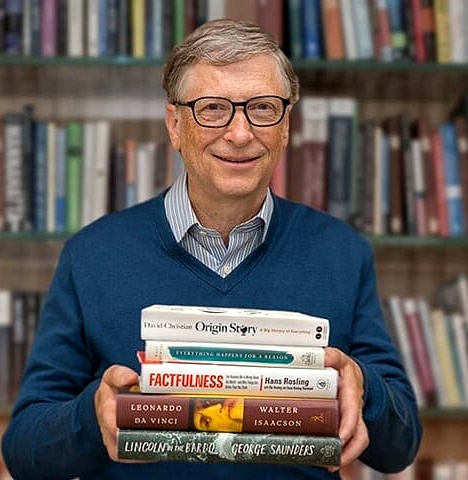
Bill Gates's Book Recommendations
Bill Gates, co-founder of Microsoft Corporation, is a pioneering figure in the tech industry, having played a key role in the personal computer revolution. His work at Microsoft, particularly the development of Windows, transformed software and computing globally. Beyond his technology contributions, Gates is also a prolific author, with notable works such as "The Road Ahead" and "Business @ the Speed of Thought," which offer insights into the future of technology and business. Additionally, his philanthropic efforts through the Bill & Melinda Gates Foundation have had a profound impact on global health, education, and poverty. Gates continues to influence both technology and literature with his forward-thinking perspectives and innovative ideas.
Showing 8 of 16 related collections
“"The future is already here – it's just not very evenly distributed."”
The Inevitable
By Kevin Kelly
Frequently Asked Questions
Explore Our Catalogue
Discover a world of knowledge through our extensive collection of book summaries.
Genres
Genres
Genres
Featured Collections
- Top Book Club Picks
- One-Stop Nutrition
- Summer Reads 2024
- Best Beach Reads 2024
- Work-Life Balance Guide
- Time Management
- Healthy Foods
- Entrepreneur Toolkit
- Mind & Body Wellness
- Future Tech Insights
- Leadership Essentials
- Financial Freedom
- Sci-Fi Masterpieces
- Parenting 101
- Books That Became Blockbusters
- Guide to a Healthy Pregnancy