Why Nations Fail Book Summary
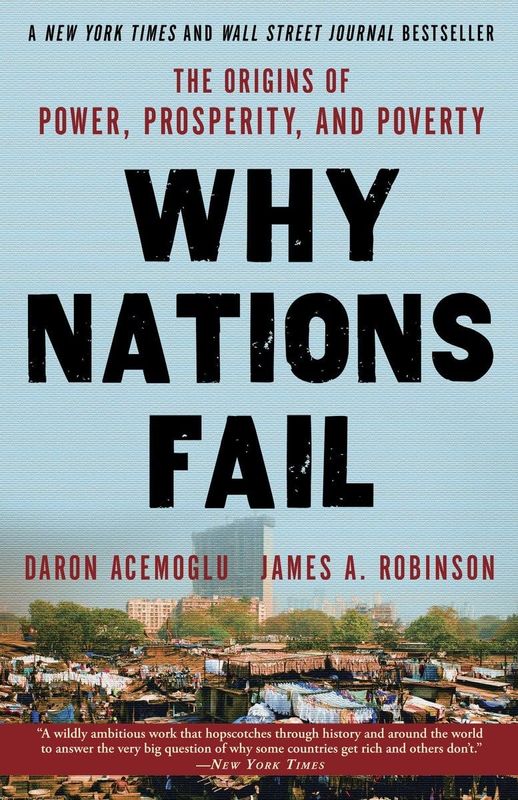
In 'Why Nations Fail', Daron Acemoglu and James A. Robinson unravel the deep-rooted reasons behind the success or failure of nations across the globe. They argue that it is not geography or culture, but rather political and economic institutions that determine a country's fate. Through compelling historical examples, the authors illustrate how inclusive institutions foster prosperity while extractive ones lead to poverty and chaos. The book challenges readers to reconsider the factors that shape our world and ignites a discourse on how we might build better systems for the future. Prepare to delve into the complex interplay of power and economics that shapes nations.
By Daron Acemoglu, James A. Robinson
Published: 2013
""Political and economic institutions shape the incentives that determine the success or failure of nations. Without inclusive institutions, history has proven that prosperity is a fleeting dream.""

Start Listening to Book Summary
Book Review of Why Nations Fail
Brilliant and engagingly written, Why Nations Fail answers the question that has stumped the experts for centuries: Why are some nations rich and others poor, divided by wealth and poverty, health and sickness, food and famine? Is it culture, the weather, geography? Perhaps ignorance of what the right policies are? Simply, no. None of these factors is either definitive or destiny. Otherwise, how to explain why Botswana has become one of the fastest growing countries in the world, while other African nations, such as Zimbabwe, the Congo, and Sierra Leone, are mired in poverty and violence? Daron Acemoglu and James Robinson conclusively show that it is man-made political and economic institutions that underlie economic success (or lack of it). Korea, to take just one of their fascinating examples, is a remarkably homogeneous nation, yet the people of North Korea are among the poorest on earth while their brothers and sisters in South Korea are among the richest. The south forged a society that created incentives, rewarded innovation, and allowed everyone to participate in economic opportunities. The economic success thus spurred was sustained because the government became accountable and responsive to citizens and the great mass of people. Sadly, the people of the north have endured decades of famine, political repression, and very different economic institutions—with no end in sight. The differences between the Koreas is due to the politics that created these completely different institutional trajectories. Based on fifteen years of original research Acemoglu and Robinson marshall extraordinary historical evidence from the Roman Empire, the Mayan city-states, medieval Venice, the Soviet Union, Latin America, England, Europe, the United States, and Africa to build a new theory of political economy with great relevance for the big questions of today, including: - China has built an authoritarian growth machine. Will it continue to grow at such high speed and overwhelm the West? - Are America’s best days behind it? Are we moving from a virtuous circle in which efforts by elites to aggrandize power are resisted to a vicious one that enriches and empowers a small minority? - What is the most effective way to help move billions of people from the rut of poverty to prosperity? More philanthropy from the wealthy nations of the West? Or learning the hard-won lessons of Acemoglu and Robinson’s breakthrough ideas on the interplay between inclusive political and economic institutions? Why Nations Fail will change the way you look at—and understand—the world.
Book Overview of Why Nations Fail
About the Book Authors
Daron Acemoglu
Daron Acemoglu is a prominent economist and professor at the Massachusetts Institute of Technology (MIT), renowned for his contributions to political economy and economic development. He is perhaps best known for his co-authored work 'Why Nations Fail: The Origins of Power, Prosperity, and Poverty,' which explores the role of institutions in economic outcomes and has sparked significant debate among scholars and policymakers. Acemoglu's writing style is characterized by clarity and accessibility, making complex economic concepts understandable to a broad audience. His research often emphasizes the interplay between economic and political institutions, and he has published extensively in leading academic journals.
James A. Robinson
James A. Robinson is a distinguished author and academic known for his contributions to the fields of political economy and development. He co-authored the influential book "Why Nations Fail: The Origins of Power, Prosperity, and Poverty" with Daron Acemoglu, which explores the political and economic factors that shape global disparities. Robinson's writing style is characterized by its rigorous analysis and accessible prose, making complex theories understandable to a wide audience. He has also authored several other notable works, including "Economic Origins of Dictatorship and Democracy" and "The Narrow Corridor: States, Societies, and the Fate of Liberty." Robinson, who holds a PhD in political science from Yale University, is currently a professor at the University of Chicago, where he continues to engage in teaching and research.
Book Details
Key information about the book.
- Authors
- Daron Acemoglu, James A. Robinson
- Published
- September 2013
- Publisher
- Currency
- ISBN
- 0307719227
- Language
- English
- Pages
- 546
- Genres
- Business and EconomicsPolitical IdeologiesEconomic PolicyPolitics and Current Affairs
Purchase Options
 Buy on Amazon
 Buy via BookShop
Support local bookstores: BookShop gives a portion of each sale to independent bookshops!
Similar books you might like →

A Farewell to Alms Book Summary
In "A Farewell to Alms," economist Gregory Clark delves into the surprising dynamics of economic growth and social change, tracing humanity's journey from poverty to prosperity. Through a compelling mix of historical analysis and innovative research, he argues that culture, rather than mere resources, played a pivotal role in shaping economic outcomes. Clark challenges the conventional wisdom of the Industrial Revolution, revealing how deep-seated behaviors and social norms influenced wealth accumulation. With each chapter, readers are taken on a thought-provoking exploration of how our ancestral past continues to shape modern economies. Prepare to rethink everything you know about wealth, progress, and the human experience!
Show Your Work! Book Summary
In 'Show Your Work!', Austin Kleon challenges readers to embrace the art of sharing their creative processes and ideas with the world. Rather than hiding behind the scenes, Kleon encourages individuals to take the leap and showcase their unfinished work, fostering connections and generating opportunities. This book serves as a manifesto for those afraid to put their creativity on display, emphasizing that sharing is vital for growth and community. Packed with actionable insights and relatable anecdotes, Kleon's message is both empowering and liberating. Are you ready to unlock your creative potential and start showing the world what you can do?
The Willpower Instinct Book Summary
In 'The Willpower Instinct', Kelly McGonigal explores the science behind self-control and how we can harness our willpower to achieve our goals. Through compelling anecdotes and research, she reveals why willpower is a skill that can be trained and strengthened like a muscle. Discover the surprising ways your brain works against your best intentions and learn practical strategies to overcome temptation. This eye-opening guide not only addresses personal challenges but also delves into the broader implications for society. Whether battling procrastination, unhealthy habits, or stress, readers will find a path toward mastering their willpower and transforming their lives.
Out of Your Mind Book Summary
In "Out of Your Mind," Alan Watts invites readers on a transformative journey into the depths of consciousness and self-awareness. He challenges conventional thinking, urging us to explore the nature of reality and our place within it. Through profound insights and provocative ideas, Watts encourages a playful curiosity about existence and the illusion of separateness. This book is not just a philosophical exploration; it is a guide to experiencing the world beyond the confines of the mind. Prepare to have your perceptions shifted as you unravel the mysteries of your own being.

Middlemarch Book Summary
In 'Middlemarch', George Eliot weaves a tapestry of interconnected lives in a provincial English town during the early 19th century. The novel explores the aspirations, disappointments, and moral dilemmas of its vibrant characters, including the idealistic Dorothea Brooke and the ambitious Tertius Lydgate. As their personal struggles unfold against the backdrop of social and political change, the reader is drawn into a rich examination of love, ambition, and the quest for meaning. Eliot's intricate narrative challenges societal norms and offers profound insights into human nature. Will the characters find fulfillment or be ensnared by the very society they strive to change?

Washington's War on Nicaragua Book Summary
In 'Washington's War on Nicaragua,' Holly Sklar uncovers the hidden stories of U.S. intervention in Nicaragua during the 1980s. The book reveals how political power plays and covert operations shaped the lives of Nicaraguans and altered the course of history. Sklar’s gripping narrative illustrates the resilience of a nation caught in a geopolitical struggle. Readers are drawn into the complexities of war, ideology, and the human cost of foreign policy. This compelling exploration raises vital questions about democracy, sovereignty, and the true meaning of peace.

U.S. Policy Toward Economic Nationalism in Latin America, 1917-1929 Book Summary
No summary available

Capital Book Summary
In 'Capital,' Karl Marx unveils the intricate mechanics of capitalism, revealing how it perpetuates class struggle and economic disparity. Through a meticulous exploration of labor, commodity, and value, he exposes the exploitative relationships hiding beneath the surface of wealth. With a bold critique of industrial society, Marx argues that the relentless pursuit of profit leads to societal decay and discontent. His revolutionary ideas challenge the very foundations of capitalism, prompting readers to question the status quo. Dive into this groundbreaking work that continues to influence modern economic thought and societal change.
Showing 8 of 27 similar books
Take your reading experience to the next level
Download our mobile app to enjoy your favorite books on the go. Get access to exclusive features, offline listening, and personalized recommendations.

Similar Book Recommendations →

Neil deGrasse Tyson's Book Recommendations
Neil deGrasse Tyson is a renowned astrophysicist, author, and science communicator, best known for his work in popularizing science through various media. As the director of the Hayden Planetarium in New York City, he has played a pivotal role in bringing astronomical discoveries to the public. Tyson has authored several bestselling books, including "Astrophysics for People in a Hurry" and "The Pluto Files," which have made complex scientific concepts accessible to a broad audience. He is also the host of the popular science TV show "Cosmos: A Spacetime Odyssey," a continuation of Carl Sagan's groundbreaking series. Tyson's contributions have significantly enhanced public understanding and appreciation of the universe.

David Heinemeier Hansson's Book Recommendations
David Heinemeier Hansson, also known as DHH, is a Danish programmer, entrepreneur, and author, best known as the creator of Ruby on Rails, a popular web application framework. Heinemeier Hansson is also a partner at Basecamp, a project management and collaboration software company he co-founded. His contributions to software development have earned him widespread recognition, with Ruby on Rails being used by thousands of developers and companies worldwide. Heinemeier Hansson is also a vocal advocate for remote work, simplicity in business, and sustainable work practices, ideas he explores in his bestselling books Rework and It Doesn’t Have to Be Crazy at Work. In addition to his work in tech, he is an accomplished race car driver, having competed in the 24 Hours of Le Mans. Heinemeier Hansson’s approach to work-life balance and entrepreneurship has made him a thought leader in the tech community, where he continues to challenge traditional business practices and advocate for more human-centered approaches to work

Naval Ravikant's Book Recommendations
Naval Ravikant is an entrepreneur, angel investor, and philosopher, best known as the co-founder of AngelList, a platform that connects startups with investors. Ravikant is a prolific thinker and writer on topics such as startups, investing, and personal well-being, sharing his wisdom through essays, podcasts, and social media. He has invested in over 100 companies, including Uber, Twitter, and Yammer, making him one of Silicon Valley’s most successful angel investors. Ravikant is also known for his philosophical musings on wealth, happiness, and the meaning of life, which have garnered him a large and dedicated following.

Ezra Klein's Book Recommendations
Ezra Klein is a prominent American journalist, political analyst, and author, renowned for his incisive commentary on politics and policy. He co-founded Vox, a widely respected news website known for its explanatory journalism, and served as its editor-in-chief. Klein's work includes the critically acclaimed book "Why We're Polarized," which delves into the deep-seated divisions in American politics. He also hosts "The Ezra Klein Show," a popular podcast where he interviews thought leaders from various fields. Klein's contributions have significantly shaped contemporary political discourse and media consumption.

Ray Dalio's Book Recommendations
Ray Dalio is the founder of Bridgewater Associates, one of the largest and most successful hedge funds in the world. He is also the author of the bestselling book Principles, where he outlines his philosophy on life, leadership, and investing. Ray is renowned for his unique approach to transparency, radical truth, and thoughtful disagreement within organizations. His insights into economics and investing have made him one of the most influential figures in the financial world. Dalio continues to be a thought leader in business, economics, and philanthropy.

Ana Fabrega's Book Recommendations
Ana Lorena Fabrega is an innovative educator and author passionate about reimagining education. Known as “Ms. Fab,” she is the Chief Evangelist at Synthesis, an education startup inspired by the problem-solving and collaboration model used at SpaceX. She advocates for alternative learning methods, encouraging curiosity and creativity in students. Ana's work emphasizes the importance of engaging young learners in real-world challenges and critical thinking. She also shares insights on education reform through her popular newsletter, Fab Fridays.

Ben Shapiro's Book Recommendations
Ben Shapiro is an American conservative political commentator, author, and lawyer, known for his sharp analytical skills and outspoken views. He graduated from UCLA at the age of 20 and Harvard Law School at 23, demonstrating his early intellectual prowess. Shapiro is the author of several best-selling books including "Bullies: How the Left's Culture of Fear and Intimidation Silences Americans" and "The Right Side of History: How Reason and Moral Purpose Made the West Great." He is the co-founder and editor emeritus of The Daily Wire, a popular conservative news and opinion website. Through his writing and media presence, Shapiro has significantly influenced contemporary political discourse in the United States.

Barack Obama's Book Recommendations
Barack Obama is the 44th President of the United States, serving from 2009 to 2017. As the first African American president, Obama’s leadership marked a historic moment in American history. His administration focused on healthcare reform, economic recovery from the Great Recession, and environmental policies. He is best known for the Affordable Care Act, as well as his efforts to expand civil rights and restore diplomatic relations with Cuba. Since leaving office, Obama has continued to engage in public life through his foundation, focusing on leadership development, civic engagement, and global issues.
Showing 8 of 26 related collections
“"Political and economic institutions shape the incentives that determine the success or failure of nations. Without inclusive institutions, history has proven that prosperity is a fleeting dream."”
Why Nations Fail
By Daron Acemoglu, James A. Robinson
Frequently Asked Questions
Explore Our Catalogue
Discover a world of knowledge through our extensive collection of book summaries.
Genres
Genres
Genres
Featured Collections
- Top Book Club Picks
- One-Stop Nutrition
- Summer Reads 2024
- Best Beach Reads 2024
- Work-Life Balance Guide
- Time Management
- Healthy Foods
- Entrepreneur Toolkit
- Mind & Body Wellness
- Future Tech Insights
- Leadership Essentials
- Financial Freedom
- Sci-Fi Masterpieces
- Parenting 101
- Books That Became Blockbusters
- Guide to a Healthy Pregnancy